Church Blog
News, Updates, Thoughts
The latest news, updates, and thoughts from Walbury Beacon Benefice.

Midsummer
Dear parishioners
I suppose Midsummer is an appropriate time for us finally to see the sun! I was lucky enough to be
away for a few days with my sister, staying the other side of Chichester. We had a list of places we
thought we might visit – but ended up enjoying the sun, sand, sea, (which certainly suited the dog),
catching up with each other and chatting.
My sister is a Ward Councillor in the borough where she lives, and Chair of the local Children’s
Services and Education board. She is also heavily involved with her chosen national political party.
So – quite busy at the moment, and it was hard to avoid discussing that current, forbidden topic, the
G…… E…….!
It was very interesting hearing her views on educational policy and resourcing from the perspective
of a Local Authority – so often perceived somewhat negatively by struggling and underfunded local
schools. In fact, I’m always impressed by the in-depth knowledge our own LA (West Berks) officers
display about our specific school circumstances and issues, in Kintbury.
At school level, we are always agonising over how to achieve maximum benefit for all the children
entrusted to us, with what always seem like minimum resources. My sister on the other hand, was
describing the constant difficulties of balancing the inadequacies of a Local Authority education
budget amidst the conflicting demands of all their schools – walking the tightrope between
important, sometimes urgent and essential immediate needs and longer term, more visionary
projects for the future . . . while always trying to maintain an effective and accurate overview of the
whole educational picture both within her patch and nationally.
Parliamentary, as well as local, politicians, at their best, care about these matters, and about the
people whose diverse needs and interests they serve. At their best, they work hard and long to
bring about improvement in all the necessary, mundane routine elements that comprise our daily
lives, while also dealing with national and international policy and occasional huge emergencies – all
the time striving to maintain the vision that originally led them into politics. At their very best – they
are drawn to the concept of service, rather than power. Of unity and sacrifice for the greater good,
rather than party divisiveness for personal gratification.
I wonder why that thought turns my mind to the description in Acts 2 of the Early Church in
Jerusalem: “All who believed were together and had all things in common; they would sell their
possessions and goods and distribute the proceeds to all, as any had need.”
A Utopian ideal – a completely impracticable and totally unsustainable fantasy – decidedly not
headline (or even small print) material for a party manifesto. And yet – just imagine . . . .
Would that party get your X?
- Jenny Veasey
- 01488 657911
Patience & Understanding
Dear Parishoners
On 30th June our curate, Alison will officially join our benefice and preach at a 10am Communion service in Inkpen Church. The service will be followed by celebratory nibbles. Please do come and welcome her.
I have no doubts that her presence will bring immense joy and energy to the ministry of the Benefice. I hope we will build a dynamic partnership, where ideas and responsibilities can be shared. I have always found it deeply fulfilling to mentor aspirants, ordinands, and curates, guiding them through their early years of ministry, witnessing their growth and development, and learning alongside them.
However, this also presents its challenges. One of which is the time and effort required for effective mentoring. Providing guidance, feedback, and support while managing my responsibilities will be demanding. There is also the possibility that navigating the enriching differences in approach and perspectives within the Ministry Team could lead to disagreements requiring patience and understanding. Alison’s learning opportunities must be carefully balanced between the needs of the parish, her secular employment, and her ongoing diocesan support so she is not overwhelmed.
As a training incumbent (TI), we receive lots of resourcing from the diocese. This week I spent Tuesday at Oxford House with a group of other TIs. It was reassuring to note the wealth of experience and skills held between us. We were asked to consider what a curate needs to learn through this pivotal period to shape their development and prepare for the broader responsibilities of ministry ahead. The frightening long list of proposals we generated was then compared with the top five suggested by the Bishop of Oxford:-
1) Spirituality that maintains a healthy relationship with God.
2) Experience of Evangelism
3) Experience of Discipling
4) Experience in leading and or growing lay teams.
5) Living with and leading in conflict and differences.
We had expanded on that list with specifics such as
· Understanding the importance of self-care and maintaining healthy boundaries to avoid burnout.
· Developing the ability to adapt to changing circumstances and remain resilient in the face of challenges with faith, flexibility, and a sense of humour.
· Display listening skills, empathy, and the ability to offer spiritual support effectively.
· Be able to craft sermons and lead Bible studies that interpret Scripture, engage with theological texts, and communicate the message in a way that is accessible and relevant to the congregation, including developing a personal preaching style and understanding the dynamics of delivering sermons.
· Mastering various aspects of worship, from planning services to understanding liturgical seasons and rites, including the nuances of different forms of worship, adapting services to the needs of the congregation, and ensuring that liturgy is both meaningful and inclusive.
· Proficiency in the administrative aspects of parish life, such as managing budgets, organizing events, and maintaining church records. Developing good organizational skills.
· Understanding the community’s needs and finding ways to engage with and serve them.
· Learning how to mediate disputes, handle disagreements constructively, and maintain peace within the parish is an essential skill for a curate.
· Working effectively with other clergy, church staff, and volunteers is crucial. A curate must learn to navigate church politics, build collaborative relationships, and lead teams while fostering a spirit of unity and shared vision.
It was perhaps rather too revealing about our current ministries!
Fortunately, Alison has a wealth of relevant skills and experience that she will bring to her curacy, plus three years at theological college; But it will still be an intense journey, particularly as she must fit her training alongside her secular work as a psychotherapist. Her first few months will be used to get to know you better. A curacy is a time of intense learning and growth so please be gentle, supportive, and encouraging!
I am grateful for the opportunity to mentor and support our curate through this transformative journey. I pray that it will be an exciting and rewarding time for Alison as I am sure it will be for us.
Thank you for your continued support and prayers.
In Christ
Revd. Annette
- Revd. Annette Shannon
- 01488 646385
Sing a New Song
Dear Friends
Last Sunday I was delighted to meet several new people at the 9.45 am
congregation in Kintbury. One of these was a sprightly 80-year-old, musician who
had been raised in Kintbury, visiting her past haunts with her daughter. After the
service, I had a very interesting conversation with her about church life. I valued her
insights on music, and worship, and her considerable passion for mission.
I had preached about defeating the devil but also about family. Being part of a
church can give people a warm feeling, a sense of belonging, and mutual support.
But there can also be a sense of belonging in being part of a congregation because it
feels comfortable and persists with old patterns and habits in an ever-changing
world.
I also mentioned that as a church congregation, we can resemble families in less
positive ways. Hard to get into. Unwilling to adapt to new ways of doing things. And
mostly interested in taking care of ourselves.
The choice of music has always been a contentious area in the Church. Traditional
hymns due to their length, often explore God’s character and our relationship with
Him in greater depth than contemporary songs, which are not necessarily inaccurate,
but because contain few words. Plus, many contemporary songs are designed to stir
emotions and awaken a desire for God, and it doesn’t take theological depth to
accomplish this.
Recently Rowan Williams a Former Archbishop of Canterbury claimed that ‘Hymns
we sing today are 'primary school level’. He went on to say, “Many of the hymns
sung at weddings and funerals today are “bland” songs chosen because people
remember them from primary school” comparing them to “baby food”. But maybe
rather than criticise modern songs we should view them as an opportunity at times to
open the church doors a little wider so that those who are not so familiar with church
life can feel more comfortable. I would love to see and hear a worship band or
instrumentalists alongside the organ a few times a year.
Some churches have embraced new styles of worship music while others have held
firmly to the old way. In this Benefice, whilst we have hymn books published in the
80 or 90s the congregations are not averse to accommodating new hymns or even
worship songs if appropriate for the occasion. We just have to print the words and
practice the songs if they are not already known. Some songs like ‘In Christ Alone’,
or Stuart Townsend’s version of ‘The Lord’s My Shepherd’, are already part of many
people's conscious, or unconscious musical repertoire. It was interesting to see how
the mix of hymns at the recent Rogation service was embraced.
I enjoy both styles and see a place for both in church services, after all the Psalms
speak often about “singing a new song”.
But I was not surprised when our visitor said that the church and worship in Kintbury
had not changed. I believe it is important and look for possible ways to bring both
traditional and contemporary music into services, without losing an atmosphere of
reverence and celebration.
Traditional hymns can inspire deep spiritual reflection and cerebral engagement with
God’s word through the theology they present in the lyrics and evoke memories of
the previous contexts in which they have been sung. At the same time,
contemporary songs can bring God’s presence into our lives in a fresh, relevant way
engaging with our emotions and our hearts.
There are some very good ‘new songs’ that could be included in our services without
alienating people who may feel uncomfortable with unfamiliar styles of music. We
can help people accept new songs by giving them some context and by explaining
why the song was chosen, what themes it contains, and how it relates to the sermon
topic. I think even introducing one of the Rogation hymns as ‘a bit funky’ helped to
still any objections.
I appreciate that different generations prefer different types of music and that
currently, our congregations are more comfortable singing traditional hymns, but
perhaps those less familiar with the church may enjoy listening to more modern
worship songs. I may want to nudge people into new directions on occasion but don’t
be alarmed, I am not planning a revolution! I love my traditional hymns.
As one website wisely commented: As church leaders, it is our job to ensure that all
people feel welcomed into our services regardless of their musical preferences. The
secret to bringing balance between traditional and contemporary music is to create a
mix of both styles in a way that appeals to all members of the congregation.
If you have any contemporary hymns or songs that you would particularly like to hear
us sing in Church, please let me know….. We may be able to produce the Walbury
Beacon top 10!
Love and prayers
Revd Annette
Alison Dean is being ordained at 2pm on Saturday 29th at the Cathedral and that anyone from the benefice is warmly invited to come and support her. It would be a lovely opportunity to visit Oxford and soak in its history, as well as encourage Alison Dean on the start of her new journey with us.
- Revd. Annette Shannon
- 01488 646385

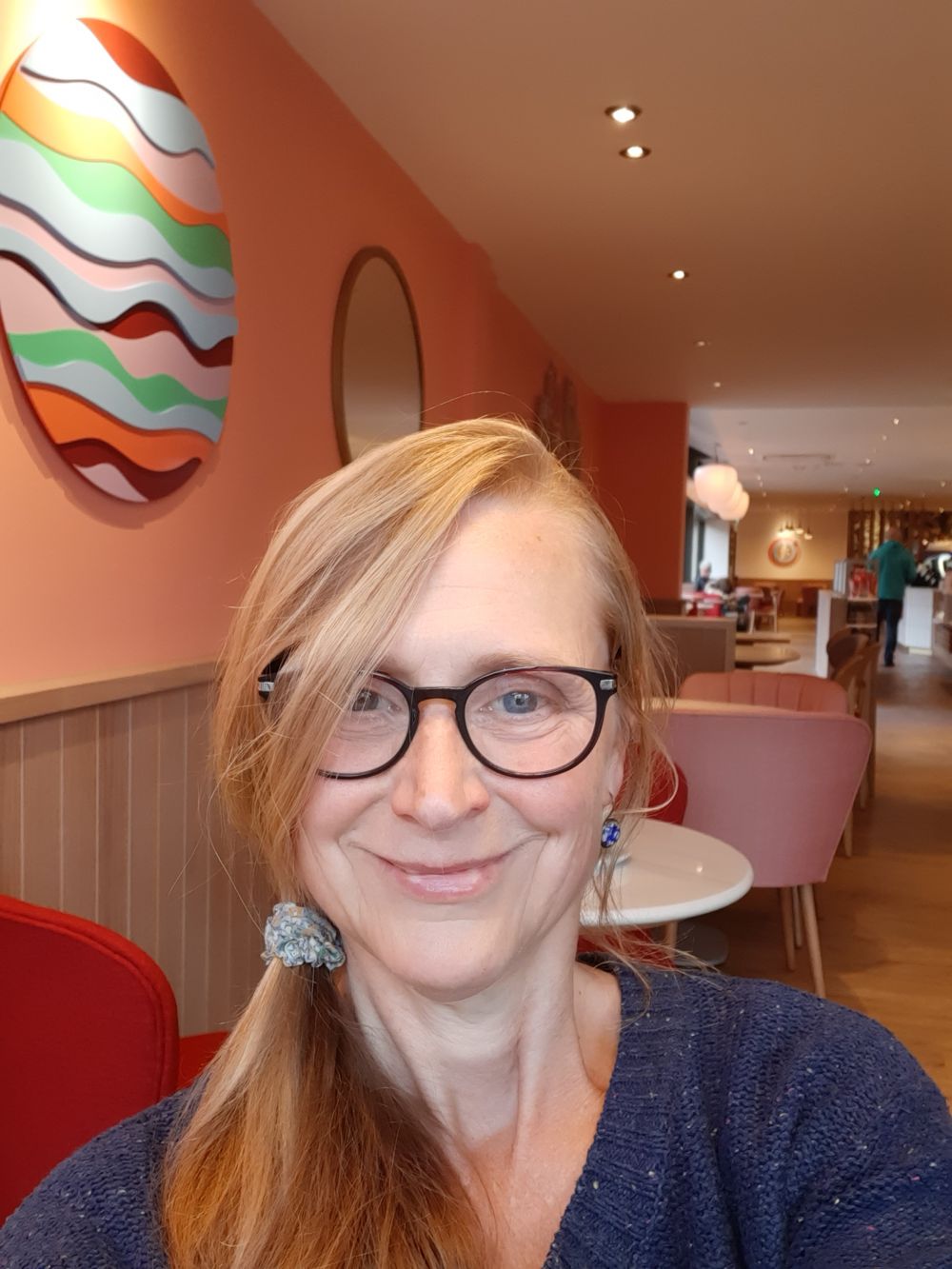
Welcome Letter from Alison
Since moving to West Berkshire some seventeen years ago, I have often enjoyed exploring on foot the beautiful hills and villages which are home to you, rambling along the Wayfarer’s Walk and the Kennet and Avon canal. It never once crossed my mind that I would be joining you here at Walbury Beacon as curate, after my ordination at the end of June. But God is indeed a God of surprises, and this is a surprise that I am delighted to embrace!
By means of introduction….I live in Thatcham with my husband Mike. My roots are in the Midlands, but I moved south in the 1980s to do a degree in Fine Art at the University of Reading. Fifteen years ago, I retrained as a counsellor, and since then have been counselling in a variety of settings including university, drug and alcohol services, and a family counselling service. I also have a private practice, which I will be continuing part time alongside my curacy. I have a real concern to see individuals – and their families and communities – flourish and grow into all that God has created and called them to be. There is much in life that can wound us, and get in the way of this, and ‘Jesus’ intention is to give us “life in its fulness”. Part of our faith journey, I believe, is working out what that might mean for each of us, and I count it a privilege to walk alongside others who are asking that question.
My own faith journey began in childhood, with some twists and turns along the way. I have worshipped in a variety of churches and traditions and this has given me an appreciation of the richness of different expressions of prayer and worship, the differences which reflect, I believe, the creativity of God. As I have a love of the outdoors and often find it easier to pray outside and up in the hills, I find Celtic liturgy, such as that of the Northumbria Community, a particularly engaging way to worship. Over the years much of my involvement in the life of the church has focused around small groups, and building relationships that stimulate spiritual growth and emotional well-being. I have a particular passion for reading the Bible with others, chewing it over to see what it has to say to us, wondering about how God wants to speak through it, and how it might make a real difference to how we do life.
When I join you in the summer, I am really looking forward to getting to know you and your communities, your shared life of faith, and hearing about what makes you ‘tick’. Do expect that I will be hanging around wanting to hear your stories over a cuppa, or even taking a stroll with you!
To those of you I have already met, thank you for making me feel so welcome.
Alison
- Tamara Laing
- 07359 327072
Combe Accounts
- Tamara Laing
- 07359 327072
Inkpen accounts. APCM report to follow
- Tamara Laing
- 07359 327072
New parish of Kintbury with Avington and Hamstead Marshall APCM & Accounts
PARISH of KINTBURY with AVINGTON
ANNUAL VESTRT & PAROCHIAL CHURCH MEETING 2023
Monday 17th April 2023, 7:00 pm, Saint Mary’s Church/Room
Minutes
23 parishioners were present with the Rev’d Canon Annette Shannon (Rector) in the chair.
The Vestry meeting opened with prayer.
One nomination for Churchwarden had been received:
Gillian Guy: proposed by Olivia Whitworth and seconded by Bridin Warner
There being no other proposals, Gill Guy was duly elected as Churchwarden for the year. She thanked the meeting for its confidence in her, and support during the previous year saying that she would continue to do her best to carry out the duties of churchwarden for the benefit of the church and parish, and adding that it would be good to have a second churchwarden to share the load.
The Vestry meeting closed at 7:08.
The Annual Parochial Church Meeting opened immediately following the preceding.
23 parishioners were present with the Rev’d Canon Annette Shannon (Rector) in the chair.
Elections & Appointments
- Deanery Synod (2 members of the laity for a 3-year period)
The previous representatives having resigned, and with no new nominations, Jenny Veasey agreed to take the role for the forthcoming year.
- PCC (up to 11 members of the laity, elected annually; 2 members may be co-opted by PCC)
The current PCC agreed to re-election en bloc.
- Independent Financial Examiner – Appointment deferred.
- Electoral Roll Officer – Post vacant.
Minutes of the APCM held on 22/05/2022
- These were accepted with no matters arising.
The Annual Report with final accounts for the year 2022 was presented.
A comprehensive report from the Treasurer provided commentary and explanation.
The accounts were accepted with especial thanks to Pauline for her work on keeping the finances in good order;
There were no queries; points raised and general comments from those present included:
- thanks and congratulations to Rev’d Annette for her first months in post; Annette commented on the trials and joys of being in a new benefice, and the problems of trying to learn so many names, faces and country lanes in a very short time;
- the appointment of the new WBB administrator;
- thanks to the churchwarden, PCC and Sidespersons for their contributions to the life of the church and parish during the year;
- the state of the church heating and the need for planning ahead for replacement in the fairly near future;
- ongoing issues with the main sound system, hearing loop and malfunctions during services;
- grant for new portable system to be used for outside events and services;
- updates on the forthcoming vesting of St Mary’s Church Hamstead Marshall, implications for parish and parishioners, and the planned merger of the parish with that of Kintbury with Avington; date, details currently dependent on procedures of Church Commissioners; name to be decided;
- current Sunday service patterns to be retained with some possible reductions / festival amendments until the arrival of the new HfD priest;
- a question about ministry with children and families similarly deferred until forthcoming ministry and pastoral changes had been absorbed.
There being no further matters for discussion the meeting closed with The Grace at 8:10
- Tamara Laing
- 07359 327072
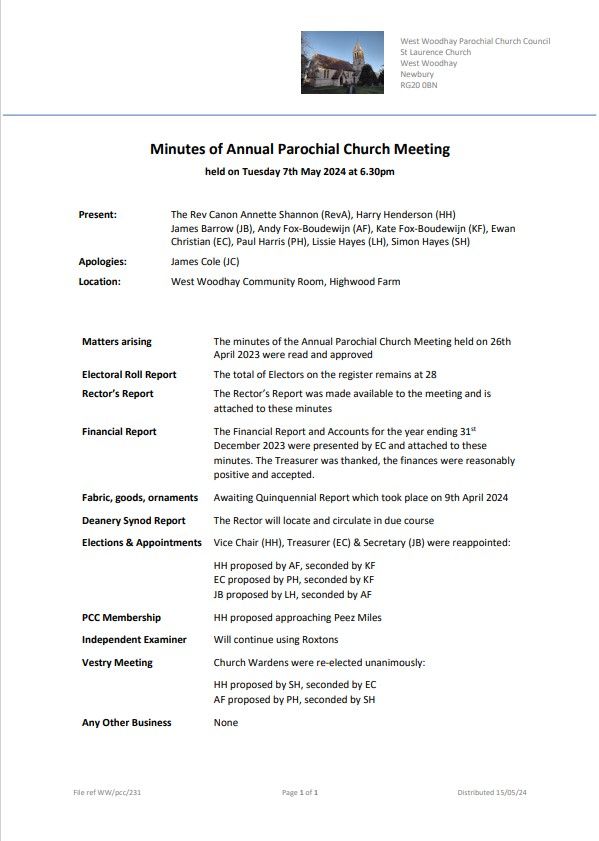
West Woodhay APCM minutes & Accounts
- Tamara Laing
- 07359 327072
How will you vote?
How will you vote?
Dear Friends,
I wonder how you responded to the news of the general election announcement from the rather damp Rishi Sunak. When I was 18 it was an election year and I was awed at being able to vote for the first time. Six of us organized a sleepover so we could stay up through the night with drinks and nibbles, excited to watch the results as they were announced. Sadly I am no longer so interested.
Last Sunday, in this heightened political backdrop, we celebrated the Trinity in Church so I pondered how to relate the two things in my mind. Fortunately, a Facebook post from a former colleague, Joe Hawes, the Dean of Edmundsbury, gave me an idea as he linked The Trinity with the theory of political Interdependence. This is when intensive transactions flow freely between individuals, communities, and countries. The transactions can be money, goods, resources, and information that flow across borders, house to house, and through communities. When the flow is stable with an equal dependence, sensitivity, and equity of vulnerability there is potential for mutual flourishing. However, when there is an imbalance, and one is more dependent on the other, there is the risk of one party being substantially disadvantaged by the actions of another. This is when insensitivity, misuse of power, and manipulation can enter the relationship causing asymmetry, suffering, and toxicity.
In the Godhead of the Trinity, Father, Son, and Holy Spirit is a model of a perfect flow of mutuality, equity, and sensitivity, and also the foundation of all good and life-giving relationships. We can apply that model by asking which of our political parties best reflects equity, interdependence, mutuality, and vulnerability through their policies and their interactions with others. Neither will be perfect but it should help us to recognise the party which will draw us closer to God and help to build His kingdom.
If you are still struggling with how to approach the election and want some pointers, I encourage you to look at the new election preparation resources on the site below which aim to help Christian voters think, act, and pray before they vote. The material includes an interactive quiz to help you discover the policies that are most important to you as prepare to vote.
With love
Revd. Annette
- Revd. Annette Shannon
- 01488 646385
The delights of Annual Parochial Church Meetings
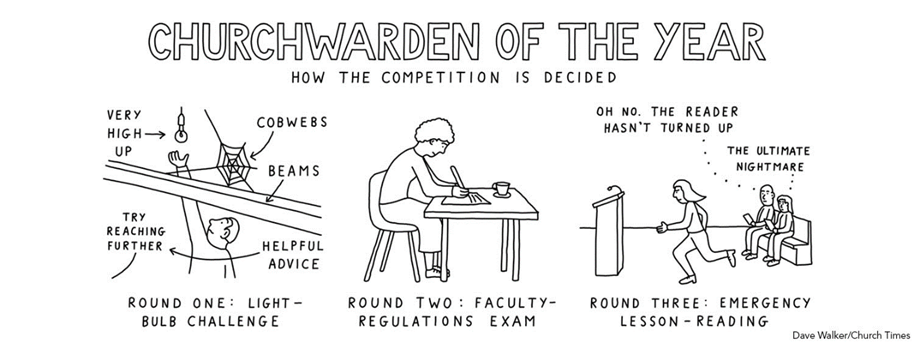
On Sunday we have the last of the four APCMs for the parishes in the Benefice; it is after coffee at
the 9.45 am service in Kintbury. It will be particularly important as it will be the first for the newly
formed parish of Kintbury with Avington and Hamstead Marshall!
These annual meetings must be held in every parish before the end of May. Having always been a
Rector of a multi-parish benefice I must confess that this time of year I am rather envious of vicars in
single-parish churches.
When I first started my faith journey elections for places on the parochial Church Council, even in
small villages were competitive. Leaders would have to be very creative and diplomatic in the way
they gathered nominations. Sadly, in most churches the village and even the regular congregations
view being present at the meeting as an ‘optional’ part of ‘being church’.
The APCM consists of two to three meetings, one to elect the churchwardens who can be anybody
from the parish as long as if they are “actual communicants, baptised and aged at least 18 years (in
some areas 21 years). In my previous benefice, I had a churchwarden who stayed in his local church
in the position of churchwarden for over 55 years. He had proudly been welcoming and saying
goodbye (sometimes rather hastily) to too many vicars but at least he will have found it more
difficult to forget me; I was his first female vicar and stayed for 11 years in post! In case I frighten off
any potential Churchwardens you are be re-elected on an annual basis, so you have an opportunity
to escape!
The APCM is also the opportunity for the parish to say thank you for all the work that churchwardens
and other officeholders of the church have undertaken as volunteers (so much of their work is
unseen)! And to support those who have generously offered to stand for the following year.
The election of churchwardens is the only business of the first meeting, and anyone who lives in the
parish can vote, whether they come to church or not. This is formally called the ‘Vestry Meeting’.
We are very fortunate to have two churchwardens in Combe, West Woodhay, and now Inkpen.
Kintbury is the only church where we only have one churchwarden although she is fortunate to have
an assistant, who having been a churchwarden in the past knows the challenges.
The second meeting is the actual APCM when members of the PCC (Parochial Church Council) are
elected. The number of PCC members a church can elect depends on the size of the parish. These
people meet several times a year to discuss the business side of the church: repairs and
maintenance of church and grounds and any other buildings the church has responsibility for;
expenditure, planning the church fairs, and ensuring that the church complies with current Diocesan
guidelines. This infrastructure enables all things to happen – the mission and worship.
Accounts are scrutinised, and reports are heard including a report on goods and ornaments of the
church – to make sure nothing has surreptitiously been removed from the building and sold on!
Some appointments are also made at this meeting: The representatives of the Deanery Synod, the
examiner for the accounts for the next year, and any additional sides people.
Some churches follow these two meetings with a third, the first PCC meeting of the year when
‘offices’ are filled: treasurer, secretary, vice chair. Other churches like Kintbury delay the first PCC
meeting, so they have some time to consider the best way to respond to changes in membership.
The apostle St Paul described the church as a body with every part vital with an important role to
play. It is the same with the church: everybody has a role to play. The APCM should be a celebration
of the life of the church, but it often feels as if it is something to be dreaded. There may be a
contentious issue to be discussed alongside the business. However, usually the most stressful part of
both the meeting and the lead-up to it, is trying to find people willing to stand for election and fill
the appointments.
According to St Paul, we all have different gifts and abilities given to us by God to be used in his
service and in supporting others in the life of the church. I am always inspired by the number and
variety of gifts that are evident in the parishes (although some keep them hidden)! We were taken
aback at Notrees when one of the residents revealed that as a child she would be part of a
gymnastics team that entertained the crowd at a very famous cricket club! Sadly, she is not in a
position now to backflip down the aisle to receive communion - but it did conjurer up a wonderful
image. It should be as simple as matching the person and their gift with the task ahead. But people
also need to be willing, and there aren’t many people willing enough to take on the responsibilities.
I am just very grateful for those who are! Thank you.
Loving God, we pray for our Churchwardens and Parochial Church members. We give thanks for
their commitment to your church and their communities, and we ask for your blessing on their
ministry.
Amen.
Love and prayers,
Revd. Annette
- Revd. Annette Shannon
- 01488 646385