Church Blog
News, Updates, Thoughts
The latest news, updates, and thoughts from Walbury Beacon Benefice.
Reflection: Our God is a Great Big God
You’ve probably heard the song: “Our God is a great big God, and he holds us in his hands.” It’s catchy, it’s joyful—and it’s deeply true. Sometimes we need reminding that God isn’t distant or small or easily overwhelmed. He’s great, big, and present—and he holds us in his hands.
In Isaiah 40:28-31 it says:
“Do you not know? Have you not heard? The Lord is the everlasting God,
the Creator of the ends of the earth.
He will not grow tired or weary,
and his understanding no one can fathom…
those who hope in the Lord will renew their strength.”
That’s our God. Not just mighty in power but overflowing with love and grace. He’s the God who made galaxies yet knows your name. Who holds the oceans, and also your everyday concerns.
C.S. Lewis once wrote: “We are half-hearted creatures… when infinite joy is offered us.” And that joy begins not in knowing everything about God, but in trusting that he’s big enough to hold us, guide us, and never let us go.
The great theologian Karl Barth was asked to sum up Christian faith in a sentence. He simply said: “Jesus loves me, this I know, for the Bible tells me so.” That’s the greatness of God in a nutshell—love made real, in Jesus.
And here’s the invitation: early in 2026, we’ll be running Alpha—a space to explore the big questions of life and faith, with no pressure and no jargon. If you or someone you know is wondering about God, searching for meaning, or just curious about faith, Alpha is a brilliant place to begin.
Who might you encourage to join in? Who could you invite? Let’s be praying now and keeping our eyes open for those little nudges and conversations where an invitation could make all the difference.
Because our God is indeed a great big God—and maybe it’s time more people knew it.
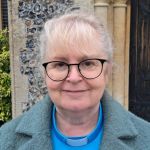
Revd Annette
- Revd. Annette Shannon
- 01488 646385
Light in the darkness
I went on V.S.O. after college with a friend, to an island in the Turks and Caicos area of the Caribbean. Sounds idyllic doesn’t it - well not quite.
In fact, it was a nearly barren island about 5 miles by 2 miles, with no electricity, no running water, compost toilets and very little food. The only water available was when it rained and was collected in a tank on our roof. That was because we were given, to our horror, the ex-slave owners house to live in. Everyone else went to collect water from a tank in the middle of the village.
These people lived in near poverty. There were no shops or industry, so the government had initiated famine relief. For this the women worked in the barren fields breaking the rocks into smaller rocks, with their babies tied to their backs. For this work they received 5 dollars a month to buy enough food to survive. There were no young men, they all had to go to the nearby Florida Keys to find work – which is why the women worked in the fields. Their houses consisted of a concrete floor with corrugated iron sheets for walls and a corrugated tin roof to cover it.
It had formerly been a slave plantation. Although slavery had been legally abolished around the 1850’s, in these remote desert islands it continued for a long while after in various forms. Some of the older inhabitants could tell you of their experiences.
Sounds bleak, doesn’t it? Yet these people had hope, and one Sunday I was walking up to a local church gathering when I heard the voice of Martin Luther King Jnr, delivering his mighty ‘I Have a Dream’ speech. I stopped in disbelief. Somehow, they had got hold of an old wind-up gramophone and were playing a recording of his speech.
We were the only white people living in this village, but they treated us so well. They were always kind and considerate towards us, willing to share whatever they had. It was a humbling experience; here we were with all our obvious advantages, but their faith and hope shone like a bright light in their hearts and lives.
That was 55 years ago, and now Martin Luther Kings dream has been and is being realised, and things have dramatically changed.
Jesus said, ‘I am the light of the world’ (John 8:12.)
At the beginning of his gospel John expands that idea,
‘His (Jesus’) life is the light that shines through the darkness—and the darkness can never extinguish it.’
May that same light shine in yours and my life to sustain and guide us in our walk of faith.
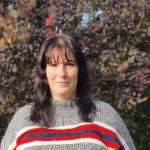
John
- Tamara Laing
- 07359 327072

Trinity

Trinity Sunday is the day before the Church goes green. Or at least, altars and vestments do.
I am often reminded of the verse in Psalm 23 which refers to the experience of resting in green pastures. It feels like a time of arrival and an opportunity for a period of reflection.
During the six months previous, we gallop through aeons of Biblical time, guided on most of our journey by the narrative Way-markers of the Gospel story and the frequently changing colours of the altar frontals and priestly robes. We start Advent, at the beginning of December, by going back to beginnings – the Patriarchs – then move rapidly forward through the Prophets, John the Baptist and Mary until – a culmination you might think – the Nativity and the arrival of the Christ Child. Which turns out not to be the end of the journey – rather, the beginning of a new one.
And so we speed on – not always chronologically which can get confusing – through the 30-something years of Jesus’ Life and Ministry, to his Crucifixion and Resurrection. And suddenly we slow down – the better perhaps to contemplate the miraculous – and move into “Real-Time” with the forty days of Resurrection appearances. It’s almost a gentle stroll towards the surreal experience of the Ascension; after that, like the disciples before us, we are left on our own, to wait quietly through the next ten days for Pentecost and the birth of the Church some 2,000 years ago. Or 50 days after the Resurrection – whichever reckoning you prefer.
Trinity Sunday demands that we stop and wrestle, like the Church Fathers in the years leading to the big episcopal conferences of Nicaea and Constantinople, with the enormous questions of Who? How? and What? is God; and now, at last, having dutifully done so, we have reached those green fields of “Ordinary Time”.
The lectionary is relaxed – we can follow the set readings if we choose, but we don’t have to. We can spend time with some of those events and Bible passages for which there was no space, no time, before. We can linger and explore the lesser trodden Biblical byways. We can, if we wish, dive deep into the still and refreshing waters of meditation and contemplation.
All those “Sundays after Trinity”. All that “Ordinary Time.” What bliss!
Enjoy . .
Jenny
- Jenny Veasey
- 01488 657911

Pentecost
Last Sunday we marked Pentecost with a joyful, celebratory outdoor service up on the hill near Combe Gibbet. The sun shone, and – most appropriately – the wind blew, albeit rather more gently than that felt by the Christian believers on that first Pentecost day. As we felt the breeze on our faces, waved streamers, flew kites, blew bubbles, we reflected on the work of the Holy Spirit, the Spirit of God which is invisible but nonetheless evident in the effects, the impact that it has. We thought about how those first disciples were changed, became confident, courageous, and empowered to tell their story, and proclaim the message about Jesus. And we thought about how we too can be changed, from the inside out, if we open ourselves to God and when we do so, his Spirit will produce in us fruit of ‘love, joy, peace, patience, kindness, generosity, faithfulness, gentleness and self-control’ (Galatians 5.22-23).
This tells us something about our need to rely on God, rather than just our human talents and skills, or our own efforts to be good people, as admirable and well-intended as those might be. Jesus had told his disciples, before he left them, to wait in Jerusalem. Wait for the Holy Spirit, which he had promised would come. We can imagine Jesus urging them, ‘Wait. Don’t rush ahead without me. By my Spirit, I will give you everything you need. All the confidence, all the strength, the courage, the direction, to take the message about me out onto the streets, out into the world. But wait. You can’t do it on your own.’
Then Pentecost happened, the Holy Spirit came, and the disciples were good to go!
Just as it was for those first Christians, so for us – we need God’s Spirit to equip us for whatever he calls us to do. And we are ‘post-Pentecost’ people. God’s Spirit is with us. We too are ‘good to go’. So let’s encourage one another, as we did up on the hill on Sunday, to have confidence in our story, and to share it with others:
So light up the fire and let the flame burn,
Open the door, let Jesus return,
Take seeds of His Spirit, let the fruit grow,
Tell the people of Jesus, let His love show.
- Alison Dean

Reflections on Nicaea
Well, it happened! A week ago, around fifty of us gathered at the lakeside of Nicaea (Iznik, Turkey) to celebrate the anniversary of the Council of Nicaea and the production of the Nicene Creed. In 325 AD the Emperor Constantine, who had granted the church the right to worship freely in the Empire in 313AD, now summoned three hundred bishops from across the Empire to his summer residence at Nicaea to thrash out a controversy that had arisen in the Church. The Presbyter Arius had made the inflammatory statement in Alexandria, and was beginning a movement, in which he stated that, “there was a time when he (Christ) was not”. In other words, Christ, far from being the eternal Word or Logos -described by John in the Prologue to his Gospel as “the Word (who) was with God and the Word (who) was God” (1:1)- was in fact a created being, subordinate to the Father. At a stroke, Arius had suggested that there is not a Trinity at the centre of the universe but rather a single God; and nor could Jesus, as a human, provide an eternal sacrifice for sin and give humanity eternal hope through his Resurrection. Afterall he was just a man!
The Council of Nicaea was summoned to re-express the eternal verities of the faith announced in Scripture and taught by the Apostles. Indeed, Jesus had himself commanded his disciples to Baptise in the name of the Father, The Son and The Holy Spirit (Mathhew 28: 19). How was the Council to describe the eternal mystery of the Trinity in which three persons invited us into fellowship with them, and together created, redeemed and quickened humanity. They chose their words carefully. Of Jesus, they said, he was “God from God, Light from Light, true God from true God, begotten not made, of one being (or of the same divine substance) with the Father”. In other words, Jesus fully participated in the Godhead as did the Holy Spirit whose nature and activity was further defined at Constantinople in 381AD in a later Council. Thus, we, through faith, are invited into a fellowship of three, each contributing to our salvation and ruling together the universe, and into their warmth and love.
A week ago, we gathered with a group from many nations and laguages, Greek, Syrian, German, Dutch, English, Welsh, Egyptian, Sudanese, American and said the creed in Greek and English: Archbishops, Bishops, clergy and laity. We were welcomed by the Representative of His Holiness the Orthodox Ecumenical Patriarch Bartholomew who was meeting Pope Leo XIV. We sang, “The Church’s one foundation is Jesus Christ the Lord”. We prayed the Lord’s Prayer in English and Aramaic. We looked out on the same lake and hills as Constantine and the Bishops had done 1700 years before and in the same month of May. We were glad that the Nicene Creed had defended and proclaimed a universal truth that however rational it might be to suppose that there was a single God, God had , in fact, revealed himself as Trinity. In two weeks, we will once again celebrate after Pentecost God the Holy Trinity and no doubt sing, “Holy, Holy, Holy is the Lord God Almighty.” It was a privilege to have been there in Nicaea and hear those words of truth echo down the centuries.

- Patrick Whitworth
Generations Together: Learning God’s Wisdom Across the Ages
One of the Church’s greatest gifts is its ability to bring together people of all ages—babies to great-grandparents—under one roof, singing the same hymns, sharing the same prayers, and holding onto the same hope.
Each generation brings something precious to our life of faith. Children remind us how to trust simply and deeply. I remember a little boy who, when his grandfather was very ill, folded his hands in church and whispered, “I know God hears me, even when I don’t know what to say.” His quiet confidence was a powerful reminder that prayer begins with presence.
Young people often see truth with rare clarity. One shared during youth group, “I don’t know all the answers, but I know Jesus stood with people who felt left out. That helps me get through the week.” Her words reminded us that theology lives not just in books but in school corridors and daily struggles.
Adults often carry heavy loads—caring for others, managing work, and holding families together. One young mother told me, “I don’t get much time to pray, but I talk to God while doing the washing up, in the car, and worrying about my children.” In her honesty, she showed how faith can be woven into the everyday.
Our older generations bring the quiet strength of lived experience. One man nearing the end of his life said, “I’ve had times I didn’t feel God at all. But looking back, I see His footprints through it all.” His assurance, born of a lifetime of walking with God, was deeply moving.
When we gather across generations, we become more than a congregation—we become a living body, rich in memory and full of promise. As it says in Joel 2:28: “Your old men will dream dreams, your young men will see visions.” No voice is too small, no story too old, no person without something to teach or learn.
To truly live this out, we must be intentional. Here are some simple ways we could aim to grow together as a church:
Invite young people to read or lead in services alongside elders.
Pair different generations as prayer partners.
Host story-sharing evenings where older members reflect and younger ones ask questions.
Involve elders in children’s groups to share their faith journeys.
Create skill-swaps—young teaching old and vice versa.
Visit the lonely in mixed-age pairs.
Let us not only share space, but share life—learning, listening, and walking together as one people of God.
With every blessing,
Rev. Annette
Vicar of Walbury Beacon
- Revd. Annette Shannon
- 01488 646385
Childhood at Home
I was helping to take a service at West Woodhay last week and I got a bit lost in the lanes around there – however I managed to arrive just in time. I apologised and explained that as I had lived and worked in cities, I wasn’t used to country lanes. I also said what beautiful countryside both they, and the other churches in the Benefice live in.
It made me think of my childhood home which was a terraced house on the main road near the city centre of Wolverhampton. This could sound poor in contrast, but it wasn’t. It was a very rich childhood. We were allowed to roam on our own from the age of about eight. Although we were near the city centre, we were also near the canals, fields and trains nearby.
One of my favourite pastimes was to go on a Saturday morning, with a friend, down along the canal to one of the major train sheds at Bushbury. It housed the G.W.R. trains, which also run through this area to London.
But they were all steam trains, and they were magical to a young boy and his friend. The sheds were a huge complex affair, servicing up to a dozen or more trains at a time. It even had huge turntables where you could watch the trains being turned around - everything your heart could desire.
Now officially we were not allowed in the sheds, but when the inspector went off we sneaked in. The men working in there could have turned us out, but they were family men, many with their own young children. They would even allow us to get up on the plate of the train. We would watch the men, coal black, shovelling the coal into the train’s boiler, sweat running down their chests. But the very height of joy for any young child was when they allowed us to pull the chord to sound the train whistle, which gave a mighty sound. Those men were so kind and understanding.
After that we would go to the nearby train station and pull out our train books. We were Train Spotters! In these books were all the number and names of all the different trains. Even their names seemed magical, like the Baden Powell, Barry Castle, Barton Hall and the so powerful but beautiful Flying Scotsman, which if you are interested, is at the Didcot Railway Centre from May 12th to June 2nd.
What has that shown me? That God does indeed provide for our needs, irrespective of where we are born or who we are; he will take care of us, if we let him. This is what the bible teaches:
Know this: my God will also fill every need you have according to His glorious riches in Jesus the Anointed, our Liberating King. Philippians 4:19
John
- Tamara Laing
- 07359 327072
Celebration
Dear Friends,
With the birds now in full song, gardens bursting into colour, and village life awakening after a long winter, there’s a palpable sense of new life all around us.
This time of year holds so much promise. As Christians, we mark it with the great feast of Pentecost—the moment when the Holy Spirit descended upon the disciples with wind and flame, sending them out into the world with courage and joy. You can read this extraordinary moment in Acts 2, where we hear: “Suddenly a sound like the blowing of a violent wind came from heaven and filled the whole house where they were sitting... All of them were filled with the Holy Spirit” (Acts 2:2,4). It’s a celebration of birth—the birth of the Church itself—and a powerful reminder that God’s Spirit is alive, active, and present among us.
To mark Pentecost, we’ll be gathering for a special outdoor service at Combe Gibbet at 11am on June 8th —a chance to step out of the walls of our buildings and into God’s creation, much like the disciples were sent out from that upper room to share good news with the world. Do please come and join us and bring a chair or blanket as we celebrate the fire of the Spirit and the life of the Church in our villages today.
The Sunday before on June 1st there is something a little different but equally joyful: our Annual Pet Service in Kintbury starting at 9.45am. It’s always a delight to welcome your much-loved companions—whether furry, feathered, or scaled—into God’s house for a time of thanksgiving and blessing. Our pets remind us of God's creativity, of loyalty and affection, and of the many ways love finds its way into our lives.
Spring and summer bring another kind of joyful celebration: weddings! One of the great privileges of parish life is walking alongside couples as they prepare to marry. These occasions are more than personal milestones—they are moments of communal hope and sacred promise. Each wedding speaks to God’s covenant with us, to love that endures, and to lives woven together with purpose. As bells ring and flowers are arranged, the church becomes a space of beauty and commitment—both deeply traditional and full of fresh beginnings. We have been blessed by 12 weddings this year and are praying for each couple as they make that commitment to each other.
Through all these services—Pentecost under open skies, blessings for beloved animals, and joyful wedding vows—the Church shows its enduring place in our villages. Not just as a building, but as a living presence: celebrating, comforting, praying, and walking with people in every season of life.
You are always welcome. Whether it’s for a service, a quiet moment in the church, a village event, or just a conversation—you are part of the story. The Church belongs to us all, and God’s Spirit continues to move through our communities with grace and power.
With every blessing,
Rev. Annette
- Revd. Annette Shannon
- 01488 646385
Eastertide
So here we are in the season of Easter. After journeying through Lent, we reached Easter Sunday, the special day when we rejoice in the resurrection of Jesus and celebrate the new life that is promised to us all through him.
It’s very easy, with the benefit of hindsight, and two thousand years of our Christian tradition, to recognise Easter Day as the high point in the Christian story, to understand the resurrection as that climatic moment of victory of life over death, which of course it is. Everything is clear to us now, everything has all fallen into place. Christ is risen! Now it remains for us to celebrate, and live in the light of that truth.
But what we see in the gospel accounts is that Easter joy didn’t break out overnight, it took time for the pieces to come together. It took time, and experience, for some to be convinced.
Remember the women at tomb, their shock and bewilderment at the absence of Jesus’ body. Then light dawning, understanding, followed by joy. Then the response of first disciples when the women told what they had found, the disciples’ unbelief, their disparagement of this crazy story. We have Peter, impulsive, passionate Peter, who needs to know for himself, he dares to hope, and he is amazed at what he finds at the tomb. Then we have the disciples on the road to Emmaus, walking with the risen Jesus, just not recognizing that it’s him – until he breaks bread with them. And then of course there’s poor Thomas, known forevermore as the ‘doubter’. Thomas who wasn’t around the first Sunday that Jesus appeared to the disciples. He didn’t see Jesus, and he just couldn’t take their word for it. He had to see Jesus for himself.
What I love about these accounts of Jesus’ resurrection appearances is how wonderfully human the stories are! If the gospel writers had wanted to elaborate their account to impress their readers, the characters surely would have been far more heroic! Instead, we get a rag tag collection of flawed individuals, confused, bewildered, doubting, all trying to make some sense out of what was going on.
On the journey of faith there is no ‘one size fits all’! All of us has a different story, and we need to take care when we compare our experience with others. We all have a unique story about finding our way to Jesus. Personally, I take great encouragement and inspiration from Thomas, and his insistence that he see Jesus, and touch his wounds, for himself. Notice how Thomas hadn’t given up, he’d missed out first time around, but he still came back the following week when the disciples were gathered together again. And wonderfully, Jesus knew what Thomas needed, and graciously met him where he was.
So, we are in good company if the resurrection seems unbelievable! I think the gospel accounts of Jesus’ appearances give us permission - more than that, give us an invitation - to wonder, to ask questions, to seek out Jesus for ourselves. However Easter was for each of us, wherever we find ourselves on that journey - whether it be disbelief, confusion, doubt, or hope, assurance, joy - let’s not cast judgement, or be deterred. Instead, let us continue to press on, seeking out the risen Christ for ourselves.
- Alison Dean
A May Celebration on the Farm – Rogation with a Difference
Dear Friends,
A May Celebration on the Farm – Rogation with a Difference
The Sunday before Ascension Day has long been known as Rogation Sunday—a time when we traditionally ask for God's blessing on the land, crops, animals, and all those who work to bring food from the soil to our tables. This year, Rogation falls on Sunday, 25th May, and we’ll be marking it with a celebration a little different from the usual.
Rather than walking across the fields as in the past—something that many of our more seasoned congregation now find a little too ambitious—we’re inviting everyone to gather on a local farm for a short outdoor service, followed by tractor rides around the estate. The farm is on an exciting journey towards reducing its use of chemicals, restoring wildflowers and habitats for bees, and nurturing the natural health of the soil—a hopeful and fitting setting for this celebration of creation.
Instead of “beating the bounds” (which traditionally involved quite a bit of bramble-rolling and pond-dunking for young boys!), we’ll be taking a gentler route—perhaps encouraging children to spot wildlife from the safety of a plough trailer!
We’ll be rounding off the morning with a lamb roast and time to enjoy one another’s company over food, in the fresh air of spring. There’ll be a nature quiz for the children, space to relax, and good conversations for all.
So what are we actually celebrating on Rogation? The name comes from the Latin rogare, meaning “to ask.” Historically, this was a time when people asked God’s blessing not just on the land but on their lives and communities. It was also a chance to reconnect with one another and the place they lived—a chance to remember that land, people, and faith are all deeply entwined.
In a world of fast-moving technology and increasing disconnection from nature, there’s something beautifully grounding in gathering to give thanks for the work of farmers and the miracle of growth in field and garden. Farming today is not without its challenges—from unpredictable weather to economic pressure and changing land use. But there are also hopeful stories: of sustainable practices, community-supported agriculture, and a renewed care for creation. Our Rogation celebration is a chance to say thank you, to pray for blessing, and to celebrate the rhythms of the land in our own community.
So do come along—bring friends, bring family, and bring an appetite*! Whether you're a regular churchgoer or not, there's a place for you around the tractor, under the open sky, at the table, or sitting on a straw bale.
With love and prayers,
Rev. Annette
*Lamb roast must be pre-booked with Annette by May 17th and is limited to 100 meals. If full you will be warmly invited to bring a packed lunch.
- Revd. Annette Shannon
- 01488 646385