Church Blog
News, Updates, Thoughts
The latest news, updates, and thoughts from Walbury Beacon Benefice.
LENT GROUP -WEEK 3
The theme for week three of the Lent course was, ‘Talking about respect and acknowledging prejudice’. It began with the story of the Samaritan woman at the well.
We considered the implied prejudices in the passage that made the meeting between Jesus and the woman so unusual:
1. Ethnicism – the Samaritans were mixed race and looked down on by many Jews. Samaria was viewed as a ‘no-go’ area for Galileans to travel through.
2. Prejudice against people of other faiths. The Samaritan originated from Judaism, but its followers had departed from the Hebrew Bible and worshiped on mountainsides rather than in the temple.
3. Sexism - Rabbis were forbidden from talking to women in public. A woman could be divorced if she was seen speaking to a strange man.
4. Moralism – the woman had five husbands and was living with a man who was not her husband. We do not know whether she was repeatedly widowed or divorced (or a combination) but she draws water from the well at a different time of day from the other women suggesting that she was not accepted by them.
The disciples conform to social prejudices marveling when returning from the city they find Jesus talking with a woman, but interestingly none of them question him as to why.
Jesus ignores prejudices that would create a barrier between the woman and him demonstrating that God’s love crosses social barriers, reaching beyond the surface issues on which prejudicial attitudes are built.
We considered common prejudices that exist in our society today such as ableism, nationalism, classism, homophobia, sizeism, and ageism, and were invited to reflect on the stereotypes that prejudices give rise to. We shared where we had experienced prejudice.
We concluded that we are prejudiced in one way or another and that we find it much easier to identify prejudice in each other than in ourselves. We thought about those who might experience prejudice in the community and even in our churches. Then we considered how we could be more active in helping each other to recognize, acknowledge, and overcome prejudice.
Our set challenge this week was to notice people around us and to listen to the unspoken judgment we may be making about them. Then to pray for everyone who we have noticed remembering God's love is for everyone. It is something that everyone could try to apply!
It is not too late to join us on Tuesday 10-12noon through Lent.
Have a lovely week ahead.
Rev Annette
- Revd. Annette Shannon
- 01488 646385
Lent 2: Talking about confidence and casting out fear.
The numbers at the Lent Group swelled despite three people for various reasons having to send
their apologies. It was lovely to have additional voices as it enabled us to gather a range of
experiences. This week we explored how fear, both as individuals and as members of a church
community, can inhibit us from living well together. We spent time reflecting on how we can help
establish relationships and a community where people feel safe.
The passage chosen for this session was John 7.53-8.11, the woman caught in adultery. We thought
about who was afraid in the story. The accused woman would have been terrified as she stood
before a group of seated, powerful men, knowing she faced being stoned to death for her crime.
We discussed whether Jesus was writing in the sand to gather his thoughts and calm his emotions,
conscious the religious leaders were trying to trap him. And concluded that the Scribes and the
Pharisees would have been fearful of this dynamic young man who was challenging their legalism
and whose words so articulately convicted them all.
We thought about which fears in the story we identified with, and what the story said about
addressing the problem of fear in our churches.
Sometimes we can fear individuals or insensitive words that land as a personal attack or fear the
possibility of being asked to explore perspectives with which we disagree and that can affect our
lives. We may be unable to be honest about who we are because we worry that others will not
regard us in the same way and reject us. We may be worried about being pushed out of the church
community, losing our friends, our sense of belonging, and being valued. We may just fear change.
We agreed that the Church should be a space of acceptance and safety but were sadly able to share
anecdotes of when this has not been the case.
We all experience fear in our lives and the capacity to make others feel fearful. We can help each
other to be careful, sensitive, and compassionate in all our relationships and remind each other of
how easily we can hurt and be hurt. There may be silent people on the fringe of our churches who
never attempt to draw near and enter because of fear. We thought about how a church could give
such people the confidence to speak and space to grow.
We looked at different fears that we have as individuals and how they might play out in a church
context. We thought about fear of public speaking, of our children disturbing other people’s
worship, of our lifestyle not reflecting the norm, of speaking and talking to new people, of having
intrusions into our privacy, of feeling trapped, of being embarrassed, of being in an unfamiliar
context, of making mistakes, of being left out.
We thought about what we might learn from our experience that may make us do things differently.
Next week we are looking at prejudice. Do come and join in. We would love to have your voice
added to the discussions.
- Revd. Annette Shannon
- 01488 646385
Lent Group session 1.
This week we meet at the Vicarage for the Lent Group (it is not too late to join in). This year we are following a course to help us examine how to live together in the face of difference and diversity. Whilst it applies to any areas of tension within the church it is particularly relevant as we grapple with different perspectives on marriage, relationships, and sexuality.
The five sessions will examine issues such as prejudice, silence, ignorance, fear, hypocrisy, and power all of which obstruct our ability to grow as Christians, hurt other people, and prevent churches from being places of welcome and belonging. We all recognised how much easier it is to identify prejudices in others rather than ourselves! However, we all have unconscious biases using them automatically to make quick judgments and assessments. These are influenced by our background, personal experiences, societal stereotypes, and cultural context. These biases affect our attitudes and behaviours toward other people but by increasing our awareness of unconscious bias we can start to mitigate against it and enable ourselves to listen to the other person's perspective. Each of the five sessions in the course includes a short video, a prayer, a Bible reading, and some activities to provoke discussions and explore the topic in more detail. Then we end with a short liturgy.
This week’s session was titled - Listening and Speaking: Addressing Ignorance and Paying Attention to Power. Church communities are full of people with different backgrounds, experiences, and views. When we share bread and wine at communion, we are reminded that we are one body, bound together in the love of Christ. This is a wonderful reality, and quite remarkable. The more we listen carefully to the voice of the other the more we learn about and from one other. Only then are we truly living as God’s family. How well as a church community do we know each other? What about the people we find it a challenge to listen to? I had the privilege of having a nun as a spiritual director for a few years before she retired. She listened so deeply to my responses that she recognised and spoke to me as the person I was inside and not to what she may have assumed. It felt very special. That is the way Jesus can make us feel if we share our lives with him. In the Lent group, we spoke about times when we’ve struggled – or failed – to speak up, and considered why and how power might have been operating in that relationship. Then we considered ways that power is used in our church, visibly and invisibly, well and not so well! And almost finished on time!
Do come and join in. You never know God may use the experience to transform you. Your voice is one we would like to hear.
Revd. Annette
- Revd. Annette Shannon
- 01488 646385
A Message from Annette
Dear All
We will shortly have two, key, lay leadership roles to fill within the deanery. Philip Read, who has done a wonderful job as deanery treasurer, has been forced to step back due to ill health, whilst our current dedicated Lay Chair had already announced, at the start of last year, that this would be his last. Neither post demands a huge amount of time for a person who has relevant skills and experience, but they are strategic and influential positions.
If you feel that you would enjoy having a significant part to play in supporting and shaping the ministry for the present and future within the Deanery, or know somebody who you think may be perfect for either post, please contact Rev Annette Shannon (revannettes@aol.co.uk), Rev John Toogood (edownlandrector@gmail.com), or Rev David McLeod, stmarysgreenham@gmail.com · 01635 33828for details. Your interest would be appreciated.
The deanery is also seeking a secretary (either voluntary or paid).
Revd Canon Annette Shannon
- Revd. Annette Shannon
- 01488 646385

Last Wednesday
Last Wednesday, Ash Wednesday, Lent began. The ashes from burnt Palm Crosses from the
previous year’s Palm Sunday are often applied (imposition) to the forehead of a recipient in
the form of a cross as a sign of their repentance before God, in a service called commination
which announces God’s judgment of sin but his love for the repentant sinner. Repentance
may sound rather forbidding, but it means a willingness to turn away from what is damaging
and wrong and turning instead towards God himself through Christ, seeking his forgiveness
So, Lent began and it coincidentally and meaningfully coincided this year, as Easter is so
early, with St Valentine’s Day! Meaningfully, because we may celebrate God’s redeeming
love not simply human, romantic love and coincidentally as Ash Wednesday and St
Valentine’s Day do not often come together. Lent is the (almost) six-week period which
precedes Easter. Easter as we know is a movable Feast determined by the Lunar calendar,
the first Sunday after the Full Moon following the Spring Equinox, or in Jewish terms the first
Sunday after the 14th Nisan, the date when Passover is celebrated. If that hasn’t confused
you….
But what is the purpose of Lent, this gift of six weeks. Yesterday, I was listening to the radio
and a piece on the importance of queueing in order to build expectation eg. like queuing for
a ride at Disney World or more significantly queuing for eight hours to see the lying-in-state
of Queen Elizabeth II. Waiting in a queue builds anticipation and is very much part of the
experience! Is Lent therefore a spiritual queueing system for the celebration of Easter – a
device for highlighting this great festival? Well, it may have that effect; but it is very much
more.
In the early church, probably from the late second century onwards the church used it to
prepare candidates for baptism who were baptised in large numbers on Easter Eve in a river
or lake or in civic baths. By the fourth century, and when Christianity had been accepted in
the Empire (313AD), bishops prepared candidates for baptism with a series of catechetical
lectures like those of Cyril of Jerusalem (c313-386). These were wonderful explanations of
the Christian faith into which a person was to be baptised but then Lent also became a fast
or time of preparation for the whole church for Easter, in which people would renew their
baptismal vows. This did include an element of fasting, giving up some foods, of spiritual
exercises like reading the scriptures or special times of prayer. The intent was on re-
ordering the focus or priorities of lives, or we might say today of de-cluttering, simplifying
and letting go of unhelpful practices as well as taking on a positive commitment to pray or
to give.
It is a manageable period neither too short nor too long – and in the northern hemisphere
co-coincides with the lengthening days (hence Lent)- leading to both a great celebration of
Easter proclaiming the Resurrection and also the annual recollection of the crucifixion on
Good Friday, by which Christ procured forgiveness for us. It is a gift of time which we are left
to use how we wish, but well used it can be, and should be, a real blessing. Happy Lent!
Patrick Whitworth
- Patrick Whitworth
Mental Health
What do Lady Gaga, Prince Harry, Demi Lovato, Jim Carrey, and Adele have in common? They have all struggled with mental health. 1 in 3 women and 1 in 5 men will experience a period of major depression in their lives. This miserable winter weather can help to exacerbate negative feelings. January is my least favourite month when I feel my most despondent and would much prefer to escape to a sunny country.
Some individuals find attending church or engaging in other religious activities helpful for their mental health, it can provide social support, a sense of community, and opportunities for spiritual reflection and growth. On the other hand, some may find that religious activities trigger anxiety, distress, or other symptoms, and may choose to avoid them.
But what can we do as a church to support those who are facing mental health issues?
· We can educate ourselves on when and how to signpost people to mental health professionals, and the variety of support groups and classes that exist locally for those who support them. We have several free fliers and booklets in the porch at Kintbury Church but I hope that we will be able to expand on that provision.
· We can offer friendship. I know that there are members in the congregation who stay in touch with those they know who are struggling mentally and with their families. They provide ongoing support offering visits, telephone calls, cards, cakes, and even casseroles. It is a valued but often invisible ministry.
· We can focus on mental health. We are hoping to repeat the successful mental health awareness evening that we held as part of the Angel Festival in collaboration with Mind and a mental health coach, in the Spring. It is a wonderful way to pick up some tips on encouraging good mental health.
· We can make an intentional decision to talk about illness and help to erase the stigma and discrimination around mental health. When we talk openly about mental illnesses it reduces the grip of stigma. Mental illness can affect anyone, regardless of age, race, religion, or income, and is not the result of personal weakness, lack of character, or poor upbringing.
·
I hope in time we will be in a position to offer a spiritual support group in Church and regular healing services.
I found a pertinent list of tips for improving your mental health and am trying to put it into practice as part of my New Year Resolutions, perhaps you would like to join me….
· Stop lying to yourself.
· Create a space from friendships that you have outgrown.
· set fire to the labels that you think define you.
· set a bedtime and stick to it.
· say yes to interests - even if you must go alone.
· seek out prayer and spiritual nourishment.
· exercise to feel good and not to lose weight.
· explore your relationship with alcohol.
· have those really, hard conversations that you have so far avoided.
· grieve the loss of the life you had envisioned.
· pay more attention to what is working.
Let’s support each other and be kind as we await the coming of Spring!
Rev Annette
- Revd. Annette Shannon
- 01488 646385
Our Church Family
King Charles has been very candid about his medical condition and his enlarged prostrate much to the surprise of many. He took the view that he might be able to “do some good” by being open about his diagnosis. Researchers have reported that online searches for prostate treatment went up by 139% in the week following his announcement. So many celebrities now are sharing their personal stories and inspiring others facing similar diagnoses.
I am hoping that the days when people were rather embarrassed or frightened to admit when they were unwell, either physically or mentally, have started to disappear. Instead of people worrying that they are alone, we support, reassure, and inspire each other through our health challenges.
I must confess when I attended church in my 30’s I was rather taken aback by how often conversations strayed into topics around health, with people comparing endless stories about their procedures, tablets, and prognoses. It all sounded so depressing. I am starting to realise now that generally for those involved is quite the opposite.
Most of you know that I was expecting to have a replacement knee operation in January. Four days before, just after I had completed all my checks and preparation and finally accepted it was going to happen, it was cancelled. It was not because of the doctor’s strike but because my hemoglobin level was down by 0.7 on the recommended level for an operation! The iron level in my blood is fine but a chronic but managed health condition, now means that I need iron tablets to maximise my uptake. I am on a watch list trying to wait patiently for my blood to catch up.
It is very unsettling not having control over how things pan out. I relentlessly quizzed my son who is a surgeon over Christmas and still spend my spare time surfing the web looking for any new insights on my medical condition, hoping to find intellectual reassurance. It is not overly encouraging as you get the full spectrum of possibilities rather than just the most likely.
But I am suddenly so appreciative that I appear to have joined a special, genuinely caring, and implicit club in church. Those who have had a knee replacement have instinctively drawn alongside me and shared their wisdom. They have reassured me by their stories of similar delays, eventual operations, and their recovery. I have been lent and even gifted equipment for use when I am rehabilitating. I have had tips on things that might help my recovery and a willingness to chat through any concerns. Prayers have been said for and even over me in church. I feel humbled and very loved. People could have just been frustrated by my anticipated absence, and the inconvenience of sudden rota changes, particularly as we are without an assistant priest, but I have met only with understanding and patience. It has made me even more determined to return as soon as I am able, even if I may need a perching stool to keep me upright! And it has given me an exquisite taste of what it can mean to be truly part of a church family. I do encourage people to trust the love that is on offer in being a member of the church and you discover you will never be facing anything alone.
I am so very grateful,
Rev Annette
- Revd. Annette Shannon
- 01488 646385

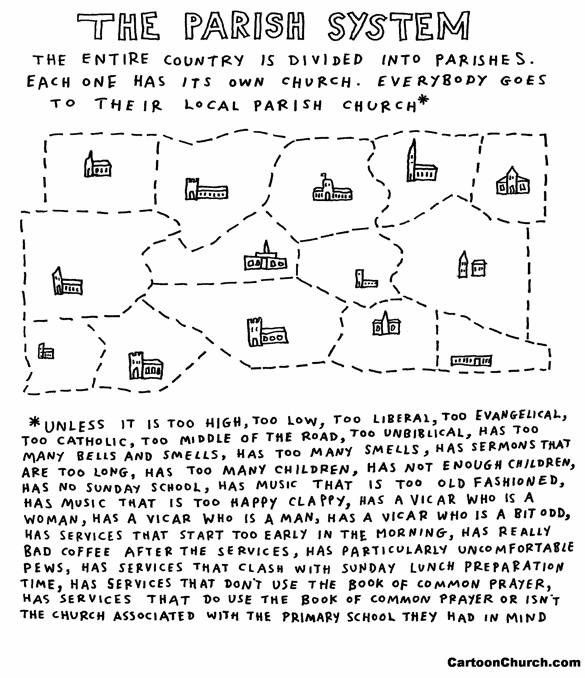
Pastoral reorganisation of Walbury Beacon Benefice and the Benefice of Newbury St George and St John
SUMMARY OF MAIN PROVISIONS OF DRAFT SCHEME
This draft Scheme provides for:
• the union of the parish of Kintbury with Avington and the parish of Hamstead
Marshall, being two of the six parishes within the area of The Walbury Beacon
Benefice;
• the parish church of the parish of Kintbury with Avington and the parish church of
the parish of Hamstead Marshall to be the parish churches of the new parish;
• the transfer of the parish of Enborne in The Walbury Beacon benefice to the
benefice of Newbury Saint George and Saint John where it shall continue distinct;
• the consequential amendment of benefice names;
• the transfer of the parsonage house of The Walbury Beacon Benefice to the
Oxford Diocesan Board of Finance for diocesan purposes; all within the Diocese of
Oxford.
Please see the more details and information in the documents below. This is a small extract from the Extract & Summary document.
Anyone may make representations for or against all or any part or parts of the draft Scheme
(please include the reasons for your views) by post or, preferably, by email to reach me no
later than midnight on Monday 19 February 2024.
If we do not receive representations against the draft Scheme, we will make the Scheme
and it will come into effect as it provides. A copy of the completed Scheme will be sent to
you together with a note of its effective date.
Please contact
Archdeacon Liz Jackson
- Tamara Laing
- 07359 327072
CAP Debt Centre reopens
Some of you will have already heard the great news that the Newbury Christians Against Poverty (CAP) Debt Centre has reopened, and is ready to help people escape from the overwhelming impact of personal debt.
They offer a completely free, face-to-face service, covering Newbury and the surrounding areas (RG14, RG17, RG18, RG19 and RG20). See the press-release below for further information.
Thank you for supporting them in the past, with your time, prayers, donations and involvement. It is vitally important, and we pray it will continue. CAP is a front-line ministry in which you can demonstrate the love and kindness of Jesus to people who are suffering under the overwhelming effects of debt.
- Tamara Laing
- 07359 327072
Church Life
One of the joys when I do not have several services on a Sunday is being able to stay and talk with
the congregation. I believe churches grow through relationships they form not just with God but also
with each other. We can all be uplifted by fellow believers as much as by the opportunity to serve
and worship. I feel very rude when I must rush off to get ready for the next service particularly when
there are new people to meet. I am not sure the impression is good for visitors even if I do explain
my exit.
We are very fortunate to have a growing Ministry Team, but it is still a struggle to manage all the
services requested by churches, particularly at busy festival times. In our smaller churches, there has
been a natural reduction in the congregation numbers over the years. The populations have
remained static with house prices making migration back into the area virtually impossible for young
people. And so many of the wedding couples do want to move into the area. The older generation
who values their church connection are now becoming frailer. Many houseowners live away from
the village for portions of the week or even year so you no longer have a core of regular worshipers.
Some of our churches are largely dependent on pastoral services weddings, baptisms, and funerals,
plus the gathering of residents, their guests, and other visitors at festival occasions throughout the
year for survival. The model of ministry then becomes that of a chaplaincy. It is a ministry with
significant potential for growth if we can accept and work with that model.
We have limited resources so it can be very sad for Church Wardens, the organist, and the service
leader to meet at a church to prepare the building for worship only to discover there is no
congregation to welcome in a small church. We have decided to be strategic and creative with
service provision so that we can ensure there is a congregation (it only needs a small gathering) to
create a positive energy, and we will also be looking at developing the pastoral service links, and
building on additional benefice services when we can gather to remind us of the full size of the
benefice family.
We are in danger of wanting to allocate blame for any reduction in the life of the church, naming the
diocese, the clergy, or locals when nobody is really to blame. It generates feelings of guilt and
frustration which is very de-motivating for everyone and can put off potential volunteers.
National resources are being used to try and alleviate any decline, but society has changed, and I
don't think we have adapted and responded quickly enough. We may throw lots of money into
keeping our church buildings, and that is wonderful as it shares the huge burden of fundraising with
those who look after the ministry of the church, but without a living ministry, the building is in
danger of becoming a historical monument that stands unloved and slowly declining within its
community.
The packed Christmas services across the benefice churches showed that they are so much more
than just a building to our communities. I am passionate about sustaining the life of each one. I
would love us to work together with generosity to secure the future of our much-loved Churches.
Please look out for and support the new ideas being produced by your hardworking PCCs,
Churchwardens, and Ministry Team as we seek to reach out to new people in our communities. And
do let us know when we have got it right!
If you have a skill that you may be willing to share within the church, please do get in touch there is
room for everyone in this family.
Rev Annette
- Revd. Annette Shannon
- 01488 646385