Church Blog
News, Updates, Thoughts
The latest news, updates, and thoughts from Walbury Beacon Benefice.

Christmas & Epiphany
On the 12 th day of Christmas, my true love gave to me . . . .12 drummers drumming, etc. A noisy gift.
You may have come across one of the spoof versions of that well-known song, written from the
perspective of the increasingly exasperated recipient, and concluding with a tersely worded
communication from her lawyer. Depending on whether you count from Christmas, or Boxing, Day,
the 12 th day is either January 5 th or 6 th . Eve of Epiphany, or Epiphany itself. And the day by which,
traditionally, Christmas decorations should have been taken down.
But when should the Crib be put away? For Christians, when does the Christmas Season end? It’s a
good question, which was raised in the Church Times recently, with responses from two parish
priests. For the last few years, in Kintbury Church, we have left the Crib in place until Candlemas –
2 nd February. This Church Festival celebrates Joseph and Mary, in accordance with Jewish Law and
Tradition, bringing their firstborn son to the Temple to be presented to the Lord. But, we do have a
little notice to put beside the Crib, to explain to visitors that we have not just forgotten or neglected
to remove our Christmas display!
So what were the responses to the question of when the Crib should be removed? As it happens,
and probably unsurprisingly, the two respondents felt there to be reasonable arguments both for
removing it after the 6 th and for leaving it in place.
Rev’d Dr D Trott goes into some detail explaining what he describes as having “a sense of what
[Christmas and Epiphany] are about”. He divides this period of 40 days (a Biblically significant
number) into two sections: Christmastide, which focuses on the Incarnation and Birth, and
Epiphanytide which is all about Revelation. This culminates in Simeon’s recognition of the identity
and significance of this Baby, and his great proclamation: “. . my eyes have seen your salvation – a
light to lighten the Gentiles . .”
As we move from the darkness and long nights of the Solstice through the lengthening days towards
the Light of Easter, let us value this period of Revelation, and take it with us through the coming
months.
Jenny
Two Epiphany images from Kintbury:
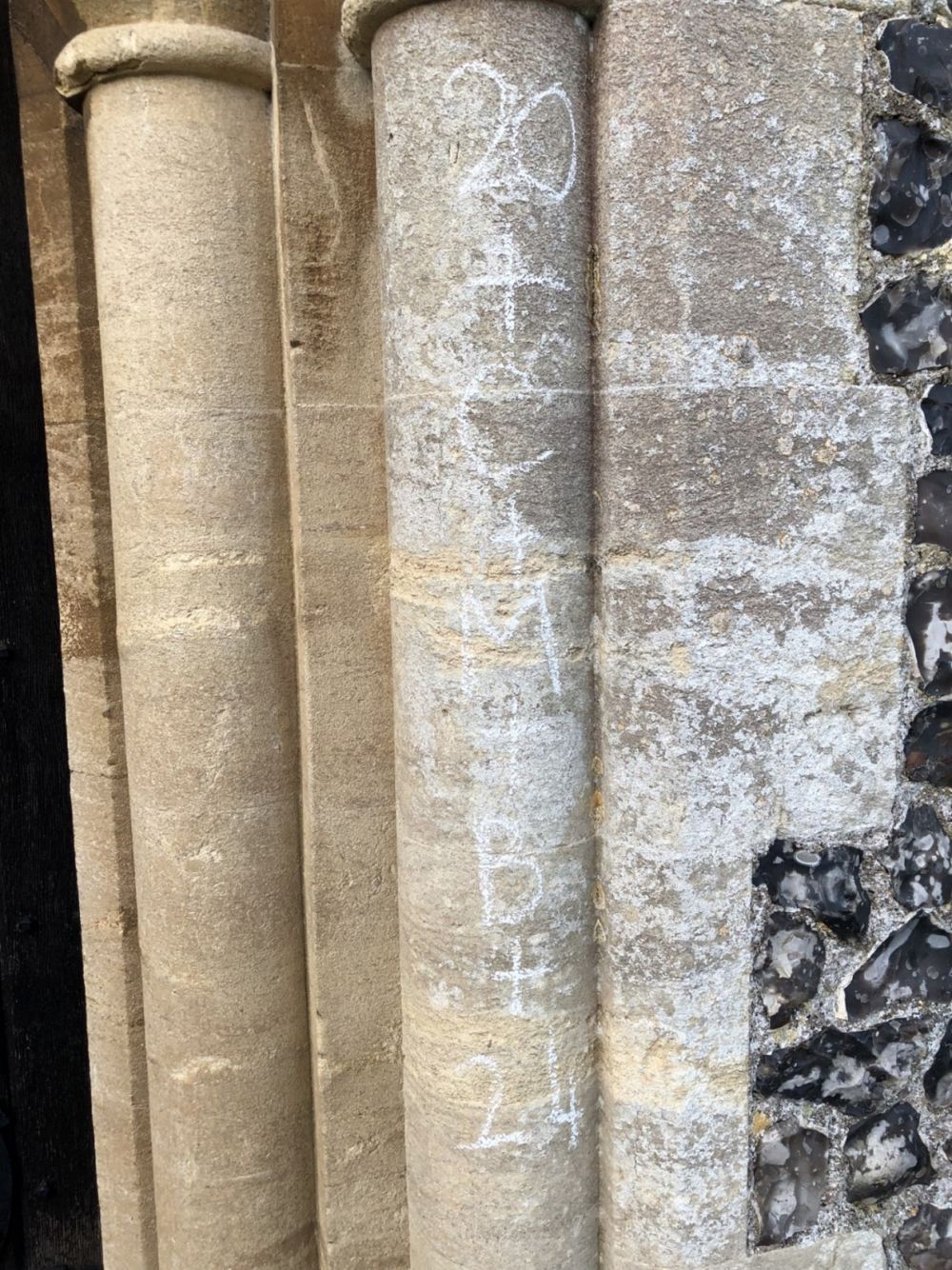 Hard to read, but the Epiphany Blessing: Christus Mansionem Benedicat (Christ bless this building) or the initials of the Magi: Caspar, Melchior, Balthasar on the door frame at St Mary’s.
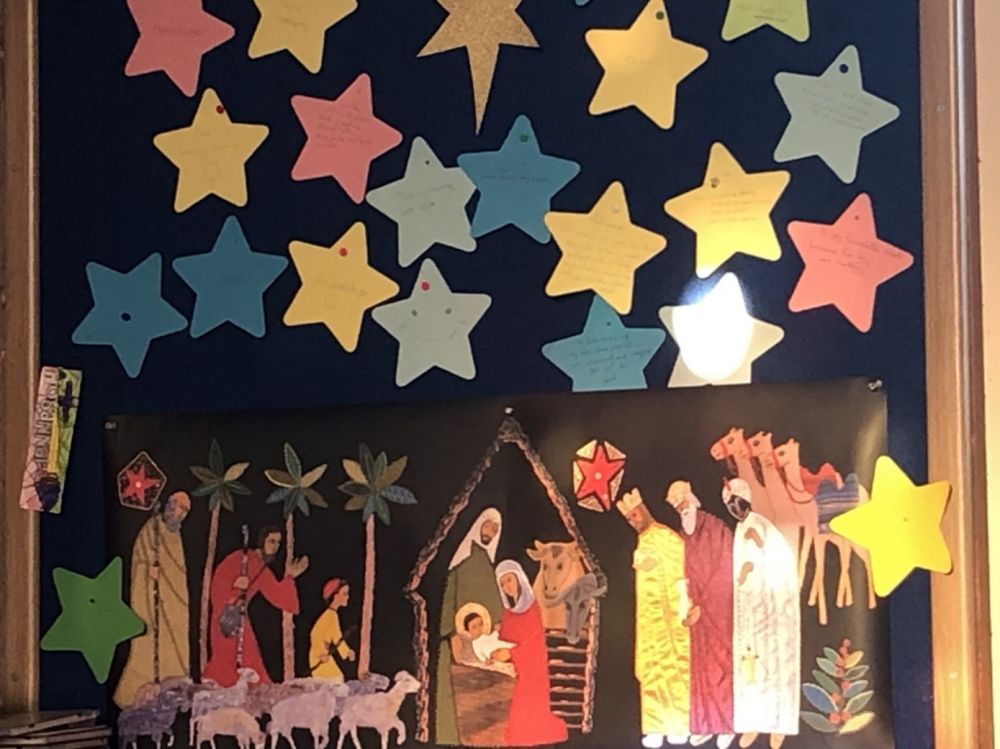
Each star describes a gift the Kintbury All Age congregation would offer the Baby
- Jenny Veasey
- 01488 657911

I wonder what the word stretch conjures up for you.
I wonder what the word stretch conjures up for you. It might be the distant memory of a
gym class at school or a more recent Pilates exercise class to keep those muscles and joints
in trim. What is abundantly clear is that after the feasting of Christmas, the newspaper
colour supplements are full of articles about losing weight, getting fit and generally toning
up the body to get it match fit, or life fit. For instance, last week there was an article in the
Saturday Times supplement about a seventy-seven-year-old fitness Guru called Joan
MacDonald who has two million followers! She spends hours in the gym stretching pretty
much everything! She lifts weights for ninety minutes four times a week (Times 06.01.2024
p 38). It is amazing what people will put themselves through for health, fitness and looks.
Well, if we will do that for the body, what will we do for the soul! Perhaps there should be
some soul-stretching too, and what would that look like?
As it happens the word stretch is no stranger to the Bible or to the saints. One of my
mentors from the past is a group of leaders from the fourth century called the Cappadocian
Fathers (in fact – surprise surprise - I wrote a book about them called, The Three Wise Men
from the East (2015, Sacristy Press) and interestingly they are getting a lot of head-space
these days. In fact, I read an article about Basil of Caesarea only this morning by a Devon
vicar. One of those three wise men or Cappadocian Fathers was called Gregory of Nyssa and
he took up this idea of stretching based on the Apostle Paul’s phrase in Philippians 3: 12 in
which he says, “I press on to take hold of that for which Christ Jesus took hold of me …
forgetting what lies behind and stretching towards what lies ahead”. The Greek word for
this stretching used by Paul and Gregory is epectasis. Stasis is the root word for a state of
being; so that ecstasy which shares this idea of being is an out of the body (ex) sensation.
Gregory put it like this, “the soul moves in the opposite direction (upwards) once it is
released from the sensuous and earthly attachments, soaring from the world below, up
towards the heavens ….. stretching with its desire for heavenly things” (Gregory of Nyssa
Life of Moses PG 44:400-401). Well, you say that sounds all well and good but to stretch
muscles you go the gym and move weights or ride a bike, run etc. How would you stretch
your soul? The answer must lie in reflection, prayer, exercising faith in a difficulty, studying
the Scriptures, drawing close to Jesus, meditation and when we come to Lent fasting in
some way. At its root this stretching must mean going beyond what you would normally do.
So good stretching; not of your body alone, but of your soul too. After all, we are soul, mind
and body. Each of us could do with a bit of stretching! We say something is muscle-
stretching or mind-stretching ,what about a bit of soul-stretching in 2024!
Patrick Whitworth
- Patrick Whitworth
The Baptism of Christ
There is a deep puddle in the gravel road into Elizabeth Gardens. I love watching the birds bathing in it with their unbridled enthusiasm. Sometimes as many as fifteen tiny birds are excitedly washing themselves in the water—innocently and joyfully embracing the opportunity to immerse themselves. I feel guilty as I nudge the car forward to gain access. They wait until the very last minute to scatter determined to savour every moment. The birds know the water will cleanse and refresh them. The birds instinctively recognize the value of the puddle for their well-being.
This Sunday we remember the Baptism of Christ and reflect on the meaning of our baptism into the Christian faith. Through it, we are invited to trust in the cleansing power of the living water—Christ and that Jesus promises us a wellspring of water flowing to eternal life.
May we acknowledge the immeasurable value of our faith in Christ for our spiritual nourishment and cultivate a faith that bathes in the depths of God's love with as much unreserved enthusiasm as those tiny birds.
Happy New Year!
In Christ's love,
Revd Annette
- Revd. Annette Shannon
- 01488 646385
Another Year Begins
Dear All
Another year begins and I resolve, like many others, to make improvements to the way I live my life. Alas, actually living out various pledges is not quite as easy. As a Christian, I am fortunate to have additional help to affect that transformation through my relationship with God and with other Christians. That does not mean I do better than anyone else but that I have a model of the way Jesus lived his life and can gain insights by reflecting on the stories and passages in the Bible. Worship, particularly Communion services, also helps in guiding me in that transformation.
I have been approached by individuals who would like to know what happens during a Eucharist, (also known as Holy Communion, the Lord’s Super, or the Mass). I have taken this opportunity to describe what happens. The 8 am Holy Communion is slightly different in order, but I am going to describe the general format of a mid-morning service across the benefice and in most Anglican churches.
The word Eucharist (Holy Communion) means “to give thanks” and is the service at which Christians obey Jesus' command to remember him in bread and wine. Jesus gave this command at the last meal he had with his followers before he died, the bread and the wine represented his body and blood about to be offered as a sacrifice for them.
Children in the Anglican churches generally wait until being ‘confirmed’ in their faith before taking bread and wine themselves but the move towards communion before confirmation is gaining ground. This policy is in place in several churches in this Benefice although it does not happen in practise. Baptised adults can receive as soon as they are undertaking training for confirmation.
There are set words for the service said by the priest but various parts where responses are said together by the congregation.
The service starts with a warm welcome and an invitation to worship. This is followed by an opportunity to reflect on and say sorry to God and each other for the wrong things that we have thought said and done. After this, the priest announces the absolution or forgiveness from God.
This is followed by a special summarising prayer called the Collect. After this is the Gloria which is a song of praise for God. We hear the set Bible readings for the day; one of these will always come from a Gospel, the books of Matthew, Mark, Luke, and John.
A priest or Reader may deliver a sermon which is usually an explanation of the meaning of the readings and what they may show us about how God wants us to live. Then we say the Creed. This lists the Christian beliefs that unite us. This is followed by prayers for God’s world. Because we believe that all Christians are members of God's family and therefore brothers and sisters in Christ before we celebrate his holy meal, we remember we are a family by shaking hands with each other and wishing each other peace. A collection is gathered from the congregation and brought forward to the altar
The bread and wine are prepared at the altar for communion. The Bible teaches us that even though we are many people we are all members together in the body of Jesus when we share in this Holy fellowship meal. Everyone is welcome at the table.
The priest says a special prayer reminding everyone of the significance of the meal and blesses the bread and wine. The people are invited to the altar rail to receive bread, which is normally a small circular wafer, and a sip of wine. Those who are not baptised and confirmed receive a special individual blessing from the priest.
After communion, the priest blesses the congregation and sends them out to love serve in God’s world. If the service is a sung Communion it will also include a number of hymns and in some churches the Gloria and the Sanctus (a special prayer that happens during preparation at the altar) is sung.
There will always be a warm welcome for you at any of the parish services. If you have never been to a Communion service please come and gain that experience in 2024. If you are interested in attending but would like someone to guide you through the service ask the person handing out the hymn books or the service leader. They can arrange that for you.
May God bless you in 2024!
Revd. Annette
- Revd. Annette Shannon
- 01488 646385
Christmas Message
I love the midnight service in Church with its tangible awe as we gather from the blackness of night to celebrate the birth of Christ with a special moment as the white candle representing Jesus' entry into the world is lit in the Advent crown. I have discovered that some churches only add the white candle to their wreath on Christmas Eve when it is ceremoniously brought out from the vestry. It creates a pause helping people focus on the poignancy of Jesus' birth and anticipate his eventual return.
No one knew the time of his birth before it happened and no one knows the time of his return. We simply wait expectantly for his second coming. But we do know that Jesus, this special baby fulfilled all the Old Testament prophecies regarding the Messiah, and that whilst we long for Christ’s return we are to continue to act as lights in the darkness. And that our faith in Jesus should be at the centre of everything we do. It feels so appropriate that at the end of the Midnight service of celebration full of hope, peace, joy, and love we are sent back out into the dark.
If Christ returned now, would we regret how we have behaved? Would we recognise where we have wasted opportunities to say and do the right thing? Are there unresolved mistakes for which we have yet to take responsibility? Is there anything God is calling us to that we are ignoring? Do we have any relationships that need to be reconciled?
While we wait for Christ, we are building and waiting for a Kingdom that will come to fruition and we have a role to play.
May you anticipate a wonderful Christmas full of love.
- Revd. Annette Shannon
- 01488 646385
Advent 4 – The Candle of Love
A new commandment I give to you, that you love one another: just as I have loved you, you also are to love one another.
John 13:34:
In our final week of Advent, we light two candles in our crown. The first is the candle of love which is also known as the Angel candle and purity with the second being the Christ candle lit in midnight Christmas service.
Love plays a vital role in the Christmas story. It was Joseph’s love for Mary that prevented him from rejecting her when he found out she was pregnant, and with what he thought was the child of another man, Mary’s motherly love for Jesus a love that will be most manifest at the foot of the cross, God’s love for everyone demonstrated in his act of sending his son to earth and Jesus’s ministry epitomised in love. Jesus said the two greatest commands are to love God and love your neighbour. God is love.
The Bible has a lot to say about love. It appears 100-300 times throughout Scripture!
But we can bury that message of love. Christmas is a busy time for many and we can get lost in the hustle and bustle of shopping, cooking, decorating our homes, and organising our celebrations. Some become anxious and frustrated, searching for the perfect gift, trying to ensure they fit in all the necessary visits. Christmas calendars quickly fill up, stress levels begin to rise and the real meaning behind Christmas is lost. It is so important to pause to celebrate the coming of our King to absorb the incredible love demonstrated by the birth of Jesus.
So here are six suggestions for ways to bring the love of Jesus closer this Christmas.
Invite a friend, neighbour, or family member to come with you to Church particularly those who have had a difficult year. Hurting people can feel that church isn’t for them but the message of that first Christmas was those who were frightened and in desperate need of good news and great joy.
Whether someone comes to church out of curiosity, a willingness to try something new, or in desperate need of someone/something to believe in, your invitation could lead them into the love of Jesus.
Use an Advent calendar to remind you to prepare your heart for his arrival. Pray arrow prayers daily for those who don’t know Christ, that they may know His love. Praying is one way we show love for other people.
One of the best ways you can reflect the love of Jesus is by giving back to those in need. Run through your wardrobe, and take out the items that you have not worn for some time, and donate them to charity.
Too often the elderly, housebound, and those in assisted living are forgotten at Christmas. Display the love of Jesus by spending quality time with those who may not have visitors over Christmas. One Christmas Eve I took home Communion and a gift to a housebound parishioner. My thought was for all the preparations for services I had ahead. I rushed the service and was embarrassed when the person apologised for taking valuable time out of my day but requesting that I would slow down next time. I have never repeated that mistake and lack of care. There are lots of different ways help an elderly neighbor. There was a lovely clip on breakfast television last year of neighbours surprising an elderly man by delivering a pre-decorated Christmas tree and lots of other treats. His pleasure was palpable. Simply being a companion for a while can make an incredible difference more than you may ever know.
During Christmas, you can feed the hungry by donating to the Food Bank volunteering in a soup kitchen, or by delivering meals to the housebound, buying a coffee or lunch for someone who is homeless. For some Christmas may be the only time of year that they get a special meal, and you can help in facilitating this.
Christmas should be the most wonderful time of the year. But for many this time of year may be depressing, stressful, or simply go by unnoticed due to more pressing problems. Jesus’ love will be reflected through your giving. Charities rely on help this time. Donate a Christmas present to a child who might not otherwise get one or a moment of happiness to a child undergoing a stressful situation, whether it’s poverty, illness, or a natural disaster.
Christmas is one of the best times of year to be a witness of the love of Jesus to the world. Any day is a good day to show the love of Jesus, but people seem to be seeking more, hurting more, and feeling even more alone at Christmas. Your actions may seem small to you but can make a huge difference in the lives of others.
I end with a quotation from George F. McDougall a Christian Missionary…
"Best of all, Christmas means a spirit of love, a time when the love of God and the love of our fellow men should prevail over all hatred and bitterness, a time when our thoughts and deeds and the spirit of our lives manifest the presence of God."
- Revd. Annette Shannon
- 01488 646385
Advent 2 The Message of Peace
The word peace is the Hebrew word shalom which means completeness or well-being. Shalom continues to this day as a Hebrew greeting that wishes someone well.
One of my favourite hymns is ‘The Lord’s My Shepherd’ which is a common choice at funerals. Although I confess to preferring Townend’s version to Crimond's. The words of Psalm 23 are so beautiful with their reference to green pastures and still waters, reminding us that in life or in death — in times of plenty or want — God is good and worthy of our trust. It uses the metaphor of a shepherd's care for his sheep to describe the wisdom, strength, and kindness of God.
Sheep are very difficult to steer but despite the popular belief that sheep are stupid, they are intelligent. They have very impressive cognitive ability and like humans, they form deep and lasting bonds with each other, they stick up for one another in fights, and they grieve when they lose a friend. However, they can be skittish, defenceless, and fearful and must be constantly watched because they are prey for wolves and eagles, and nowadays stray dogs, motor vehicles, and thieves.
I wonder why Jesus calls us his sheep. The metaphor feels more comfortable when we recognise that sheep possess reasonably good cerebral functioning and can form relationships. But it also works when we look at all the messes that we make, how fearful we are, and our fickle and wayward we can be.
Thankfully God sent us a Good Shepherd, who is gentle when he finds us far from home, but firm when he needs to be.
It was the shepherds who were chosen to share the Good News of Jesus’ birth. That first Christmas was a sign of peace with God that would last for eternity. Our Good Shepherd paid a high price for that peace.
This week we are invited to reflect on areas where we don’t always have peace in our lives (Not getting along with members of family or friends, overloaded schedules, finances, etc.), and about things that can keep us from having peace with God.
I don’t know about you, but I am very grateful that I have a shepherd to guide and protect me.
- Revd. Annette Shannon
- 01488 646385

Christmas Services & Events this December
Sunday 10th December
- 8:30am Inkpen: HC-BCP
- 9:45am Kintbury: Commissioning Lay Leaders
- 11:15am West Woodhay: Carols
- 4pm Inkpen: Christingle
Tuesday 12th December
Wednesday 13th December
- 7pm Kintbury: Carols in the Square
Friday 15th December
- 4pm Inkpen: Crib & Nativity
Sunday 17th December
- 8:00am Kintbury: HC-BCP
- 3:00pm Combe: Carols
- 6:00pm Kintbury: Village Candlelit Carols
- 6:30pm Inkpen: Readings & Carols
Saturday 23rd December
Christmas Eve
Christmas Day
- 8:00am Avington: HC-BCP
- 9:45am Kintbury: HC-CW
- 9:45am Inkpen: HC-CW & Christmas Family Service
- 11:15am West Woodhay: Family Service
Sunday 31st December
Merry Christmas from everyone in Walbury Beacon Benefice.
- Tamara Laing
- 07359 327072
Advent 1 – Candle of Hope
"But those who hope in the Lord will renew their strength. They will soar on wings like eagles; they will run and not grow weary; they will walk and not be faint."
Isaiah 40:31
Hope is so important. It helps us to maintain positive relationships and physical and emotional health. Even during times of uncertainty and adversity, hope can endure and even thrive. It is available to everyone.
Researchers have noted that when fear is paired with looking toward the positive, it becomes hope and can provide us with new possibilities.
Psychiatrist Viktor Frankl (1959), who survived the Auschwitz Nazi death camp, claimed there is always a choice, and that emotional health is influenced by the attitudes we choose, the decisions we make, and the desire to look forward rather than backward. When we believe we have the capacity, a plan, and the resolve to reach a goal it can shift us from wishful thinking into action.
Attending to the glimpses of goodness in our lives offers opportunities for hope and renewal. Experiencing the beauty and warmth of the sunshine, a flower emerging through the cracks on a pathway, sitting back comfortably in our favourite chair, sorting through photographs that evoke positive memories, or listening to a special song are some possible examples.
Research has shown that being appreciative has emotional, physical, and interpersonal benefits. These positive effects can be enhanced by keeping daily in a gratitude journal.
Christian hope is something even greater than we can create ourselves. It is a confidence that something will come to pass because God has promised it will.
Faith and hope are overlapping realities for me: hope is faith in the future tense. In essence, most of faith is hope.
The Bible says, "Faith comes by hearing and hearing by the word of God" (Romans 10:17).
This implies that hope, like faith, is strengthened by listening, reading, studying and internalising the Good News contained in the Bible.
The Canadian Evangelist said the “Christmas message is that there is hope for a ruined humanity--hope of pardon, hope of peace with God, hope of glory--because at the Father's will Jesus became poor, and was born in a stable so that thirty years later He might hang on a cross.
When we are facing difficult circumstances, we are invited to look to Christ, look to his promises, and hold fast to them. Christian hope comes from the promises of God rooted in the work of Christ.
Revd Annette
- Revd. Annette Shannon
- 01488 646385
Sung Compline
If you enjoy sung Compline - Radio 3 is broadcasting a weekly service on Monday evenings during Advent, 9:30pm, from different venues around the country. Last Monday's was a traditional language version - you can find an order of service on the CoE website.
Jenny
- Jenny Veasey
- 01488 657911