Church Blog
News, Updates, Thoughts
The latest news, updates, and thoughts from Walbury Beacon Benefice.

The Council of Nicaea and Nicene Creed
In the middle of next month, with a group of fellow pilgrims- about forty of us drawn from across Europe and the Middle East- I will be celebrating the Council of Nicaea, and in particular the issuing of the Nicene Creed in 325AD. Every week in this Benefice we say the Nicene Creed during the Communion Service as a declaration of faith. It is the oldest surviving text that is collectively said by congregations in Britain, and this year we celebrate the 1700th Anniversary of its issuing in Nicaea (Iznik, Turkey). The Apostles Creed, which we use in Morning and Evening Prayer, dates from the fifth century and may well have originated in Gaul (France). The Nicene Creed is therefore the oldest part of our liturgy but the oldest texts used in worship are taken from the Bible which was mostly composed or assembled from 600BC (the time of the Jewish exile) to 100AD.
As it is an Ecumenical Text used by Roman Catholic, Orthodox (except one clause added later the filioque) and Protestant Churches, it will, I am sure, be used in the worship of the Roman Catholic Church in its obsequies for Pope Francis this weekend. We remember Francis and his service to the church with thanksgiving, and especially at this time pray for our Roman Catholic Brethren here in the village of Kintbury at St Cassian’s, as well as churches in Newbury and Hungerford as they move forward, not forgetting the Conclave.
The Council of Nicaea was called by the Emperor Constantine (306-337AD) who had recently become a follower of Christ and had taken both the Western and Eastern Roman Empire back under his rule. An issue had arisen in the church about the status of Christ as being fully God and fully Man. And a presbyter in Alexandira called Arius had begun to teach that Jesus was not the eternal Son of God, but a created being. This had caused great consternation in the church and, following consultation with leaders, it was decided to call the First Ecumenical Church Council to resolve the issue. About 300 Bishops assembled at the summer Palace of the Emperor in Nicaea, just south of Constantinople so recently founded by Constantine himself on the ancient Greek city of Byzantium. Among other things they agreed the Creed and in particular that Jesus is, “The only Son of God, eternally begotten of the Father, God from God, Light from Light, true God from true God, begotten, not made of one being (substance) with the Father.” Although at the time almost all the bishops signed up to it, later a number of senior bishops resiled and Constantine’s successors took a more Arian position. It was not until 381 and a subsequent Council at Constantinople, called by Theodosius I, that the Nicene Creed was affirmed, and somewhat expanded, and this is what we use today.
On May 20 ,1700 years after its first promulgation, I will be attending a Celebration of the Creed led by Patriarch Batholomew of Constantinople. I’ll let you know how it goes. In the meantime, let us especially enjoy using it in church, affirming our belief and hopefully neither earthquakes in Turkey nor demonstrations in Istanbul will get in the way!!
Patrick Whitworth
- Patrick Whitworth
The Power of the Resurrection
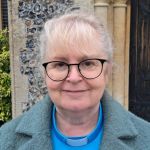
At Easter, we celebrate the greatest comeback story of all time—the resurrection of Jesus Christ from the dead. And beyond the hymns, celebrations, hot cross buns, chocolate, and church services, Easter invites us to reflect on what this means for our lives today.
In a world filled with challenges from news of President Trump’s sudden decision to impose import tariffs that have destabilised the economy to the ongoing areas of brutal conflict around the world, Easter reminds us that death does not have the final word. The resurrection tells us that hope is alive, love is stronger than hate, and light has and will continue to overcome darkness. It’s a message of renewal, a reminder that no matter how tough life gets, there’s always a chance for something new to emerge.
As the days grow longer and the weather warms, we’re also reminded of new life in nature. After a long winter in Spring, the world begins to awaken. Trees bud, and flowers push through the soil, bringing colour and fragrance. It’s one of the simplest yet most powerful reminders of resurrection. When everything seems dead, the natural world comes alive again. The sight of those emerging buds and blossoms lift my soul. They remind me that even in the coldest, darkest seasons, something new is always on the horizon. Just as flowers trust the seasons, we are invited to trust that God is at work, even when we can’t see it.
Of course, not everyone in the world experiences seasonal weather. In tropical regions like parts of Africa, South America, and Southeast Asia, the climate remains warm year-round. Yet even in these places, there’s cyclical renewal—rain comes and goes, crops grow and are harvested, and life continues. No matter where we are, there’s always change and growth.
The resurrection of Jesus is like the first sign of spring. It’s the promise that no matter how dark or cold the winter, new life is always possible. The same power that raised Jesus from the dead is at work in us, bringing hope and renewal. With God, no situation is beyond redemption.
Paul writes in Romans 6:4, "We were therefore buried with him through baptism into death so that, just as Christ was raised from the dead through the glory of the Father, we too may live a new life." Easter calls us to embrace that new life. The resurrection isn’t just an event to remember; it’s an invitation to live in the hope of restoration and transformation.
The resurrection is a present reality. With God, all things are possible. We are invited to rise from the challenges of life, knowing that God is always bringing new beginnings. He is, after all, a God of surprises.
Happy Easter!
Revd Annette
- Revd. Annette Shannon
- 01488 646385
Palm Sunday
This week is Palm Sunday, the red-carpet event of Holy Week. We celebrate Jesus riding into Jerusalem, hailed as a king—complete with palm branches, coats on the ground, and a donkey. It's an event brimming with excitement, anticipation, and, let’s be honest, a little bit of irony. Here’s Jesus, the Son of God, provocatively arriving at the city, but instead of riding in like a mighty ruler, He’s riding on a humble donkey. And the people treat it like the royal event of the year, shouting "Hosanna!" and waving palm branches, almost as though they’re attending a grand parade. What was going through the minds of those who were waving those branches?
They were expecting something big—something powerful, something royal. A king who would overthrow the Romans, restore Israel’s former glory, and maybe even ride in on a magnificent war horse, like kings in the past. Instead, they got a king on a donkey. How did they reconcile their expectations of a conquering hero with this quiet, humble arrival?
Jesus wasn’t coming to fulfil their vision of a military leader. He wasn’t coming to set up an earthly kingdom. Instead, He came to bring a different kind of victory—one that looked more like service and sacrifice than glory and power. Jesus was showing us that the Kingdom of God is radically different from any kingdom we expect. It’s not about power, control, or conquest—it’s about humility, love, and service.
How many kings—or politicians for that matter—do you know who would choose to arrive in a Skoda rather than a Bentley? It’s like showing up to a job interview in flip-flops—unexpected, unconventional, yet somehow, it fits. It was exactly what the people didn’t anticipate, and in doing so, it revealed the very nature of God’s kingdom. Jesus didn’t come to flaunt His power; He came to demonstrate the depth of His love for us through humility and sacrifice.
And this wasn’t some random decision on Jesus’ part. It was the fulfilment of prophecy. Zechariah 9:9 says, “Rejoice greatly, Daughter Zion! Shout, Daughter Jerusalem! See, your king comes to you, righteous and victorious, lowly and riding on a donkey.” Jesus was making a theological statement that the Kingdom of God is not what we expect. It doesn’t operate by the world’s standards of power but rather by the standards of grace, love, and self-sacrifice.
Why do we so often expect God to show up in grand, dramatic ways? How many times do we wait for that thunderous miracle, that earth-shattering sign, when in reality, God is more likely to show up in the quiet, humble moments of our lives? Could it be that, like the crowd, we are waiting for a red carpet when God is offering us instead a dusty road and a donkey? The spectacle isn’t the point; the purpose is.
Palm Sunday is just the beginning of the journey toward Easter. The crowd cheered for Jesus that day, but just days later, many of those same voices would shout, “Crucify Him!” It’s a reminder that expectations can change quickly, and the same people who welcomed Jesus with joy would later be the ones questioning who He really was. How often do we find ourselves in that same place—shifting our expectations when things don’t go the way we hoped?
While we might laugh at the absurdity of donkeys, palm branches, and spontaneous parades, there’s a deeper truth here: the King of Kings doesn’t need our applause or fanfare to be Lord of all.
He doesn’t need grandeur to accomplish His purpose. And perhaps, just maybe, let’s open our eyes a little more to see Him in unexpected places. Because sometimes, the biggest blessings come not on a war horse, but on a donkey.
Where might we be overlooking His presence in the quiet, unassuming moments of our lives?
Love and prayers
Revd Annette
- Revd. Annette Shannon
- 01488 646385

Light in the Darkness
Light in the Darkness
What are the things that really matter to you? Is it someone’s kindness you remember, or their wise words when you really needed them?
My dad was in the First World War and was in the Somme. He was invalided out after a mustard gas attack, which nearly killed him. It profoundly affected who he was and the way he lived his life.
He was invariably kind and thoughtful to whoever he met. He met mom between the wars, when she had been left with two young children to bring up on her own. No easy task then, never mind now. She went on to have a further two boys with him, but he treated all of us exactly the same.
As we grow up, and reach our teens, we can easily discard what our moms and dads teach us, thinking we know more than them. But to be honest, as I have grown older many of my dad’s wise sayings have come back to me, and I find them so useful in my day-to-day life.
When I remember him now, I realise he lived a life of thankfulness. It would have been easy, I would have thought, for him to be resentful and perhaps embittered. He was sent as a young man of seventeen onto the battlefields in France, into the living hell that was trench warfare. Yet the only comment he made, when I asked him about it, was that he felt a deep sorrow for the friends he had lost on that battlefield. He was also eternally grateful, that for a reason he didn’t understand, he survived it and lived.
In the darkness he had found the light that John talks about in his gospel, when he talks about Jesus.
5 The light shines in the darkness, and the darkness has not overcome it. (John 1:5 N.I. V.)
May we too live in that light, and not allow the darkness that can exist in this world to overcome us.
John Seabridge
- Tamara Laing
- 07359 327072

Lent so far
I wonder how Lent has been for you so far? It’s a season of penitence, when we are encouraged to take an honest look at ourselves, including our shortcomings. A time that we commit ourselves to spiritual disciplines. This, combined with the still-chilly days and too-long nights, might seem to make for a rather gloomy time.
The prophet Isaiah spoke these words:
For thus said the Lord God, the Holy One of Israel:
In returning and rest you shall be saved;
in quietness and in trust shall be your strength (Isaiah 30.15)
The words ‘in returning’ here can also be translated ‘in repentance’- the meaning is the same. This is the voice of God calling his people to return to him, to turn away from their wanderings and come back into a loving, faithful relationship with him, the relationship for which they were created. It was written at a time that the people of Israel were seeking security through alliances with foreign nations, they were compromising their identity, their integrity, trusting in other powers, both political and spiritual. They were insisting on going their own way, trusting their own judgement, and forgetting the promises of God. And yet still God calls them. His voice is the voice of a lover, calling the beloved.
I wonder if we might feel somewhat differently about Lent if we understood the call to repentance as the voice of love, the voice of God wooing us back to himself from wherever we’ve wandered? The voice of God calling us to come to him, in all of our frailty and with all our flaws? To turn away from all the poor substitutes that have beguiled us into thinking we can fix things without him, that we can find satisfaction in lesser gods.
If we have any doubt about this voice of love, we need only look – as we do in this season - to the journey of Jesus, moving steadily towards Jerusalem, towards Gethsemane, towards the cross, to see what lengths that love would go to.
I am reminded of the famous and oft-quoted words of St Augustine in his Confessions:
“You have made us for yourself, O Lord, and our heart is restless until it rests in you.”
So, if this season has so far felt somewhat heavy, or negative, or simply irrelevant, perhaps it can be reframed, reimagined, in the context of a love story. A call to a deeper, richer, more liberating relationship with God, as we turn back and see that his arms are open wide.
- Alison Dean
Shrove Tuesday
What a truly joyous occasion the Autumn Club’s meeting in Church on Shrove Tuesday turned out to be!
Seeing the Morris dancers perform on this special day was magical. The colorful costumes, rhythmic stepping, and lively music filled the space with energy. It was impossible not to smile as spontaneous clapping and foot-tapping broke out among the audience particularly the visitors from Notrees.
It was particularly delightful to experience such a celebration on Shrove Tuesday—a day of festivity and togetherness before heading into the more reflective season of Lent. The gathering became a heartwarming reminder of how deeply connected our community is through shared traditions and moments of joy.
Morris dancing is a celebration of history, culture, and community spirit. This age-old English tradition is brimming with energy and symbolism, resonating with the church’s values of gratitude, togetherness, and joy. Recognizing the deep roots Morris dancing shares with our local heritage and the rhythms of rural life, I was delighted to open the church to this living history.
Historically, the connection between Morris dancing and the church has been rich and significant. In the past, Morris dancers were integral to village celebrations and church festivals, often marking key points in the agricultural and spiritual calendar. By bringing Morris dancers back into church settings, we’re not only continuing this tradition but actively celebrating the intertwining of faith and culture that has enriched our communities for centuries.
As we prepare to host more farming services as a church family, Plough Sunday, Rogation, and Lamas in addition to the usual Harvest celebration, the possibility of inviting Morris dancers on occasion feels like a natural and meaningful step forward. These services, after all, are about giving thanks for the hard work of farmers, the bounty of the land, and the cycles of life that sustain us. What better way to honor this than by incorporating the vibrant energy of Morris dancing? Their lively music and steps embody the gratitude and joy we feel for these blessings, creating an atmosphere of celebration that perfectly complements the occasion.
By looking at the possibility of including Morris dancing in farming services and other events, the church hopes to deepen its connection to the local community, extending a warm and inclusive welcome to all. This partnership is a powerful reminder that faith and tradition thrive when celebrated together, with openness and creativity. With bells jingling, ribbons flying, and a shared spirit of gratitude, these occasions become a beautiful testament to the richness of life, culture, and faith.
Moments like these remind us of the joy in unity, the beauty of shared heritage, and the power of community—a collaboration we’re excited to see grow in the future. What a way to bring hearts together!
Revd Annette
- Revd. Annette Shannon
- 01488 646385

Making space
Last term, Annette, Alison and I started to use a Worship resource called “Spacemakers” in Kintbury St Mary’s School. This has been developed by the Oxford Diocesan Board of Education, to support contemplative spirituality in our Church Schools. It owes something to mindfulness, something to meditation, something (quite a lot, in fact) to Ignatian spirituality – without actually being any of those.
By now, you are probably thinking: “Thank goodness it isn’t me trying to persuade a classful of lively youngsters to meditate – good luck with that one!” And it can be a bit like that!
Finding that place of calm and silence within ourselves can be a challenge for adults and children alike; the first Spacemakers’ session (“Stilling”) offers valuable support for leaders and participants by using a visual focus to symbolise the process.
A large clear glass jar is filled with water. A couple of handfuls of soil is added and the container shaken. The pure water is instantly clouded with dirt and debris. The jar is placed where everyone can see it and we watch in silence as the particles swirl – swiftly at first, then slowing . . . and gradually sinking. It is mesmerising to watch and a process which cannot be hurried. There is no place for impatience here.
Slowly and imperceptibly the sediment settles – and slowly and imperceptibly the water clears. At last it becomes possible not just to look into the jar – but to look through it, at the world beyond. A world now visible in a new light – shedding a new perspective on a familiar scene. A process of renewal, of cleansing, of settling – of stilling.
You don’t have to be a child at primary school to find that your thoughts are swirling dangerously out of your control. You don’t have to be 9 years old to feel that you cannot see a way forward through all the elements that are clutching at you and clouding your vision.
For Christians, there is an obvious truth encapsulated within the symbolism. Christians know that they have a place where the mud can be left and the water of life cleared.
But I think the imagery creates opportunity – opening up the space where non-believers may get a glimpse of a possibility that, maybe, things can be different; problems can be laid aside – even if only momentarily; clarity can reappear; and life – and lives – can be changed.
That’s quite a lot to be offered by a short act of worship in a primary school.
Jenny
- Jenny Veasey
- 01488 657911
The New Archbishop of Canterbury: An Insight into the Selection Process
The New Archbishop of Canterbury: An Insight into the Selection Process
How is the New Archbishop Chosen?
The process of selecting the new Archbishop of Canterbury is structured and spiritual. When the previous Archbishop resigns, the CNC is tasked with discerning who God is calling to lead the Church. This process involves multiple stages, beginning with consultations with clergy, the public, and experts. Following these discussions, the CNC nominates a candidate whose name is submitted to the Prime Minister, and ultimately, The King for final approval. Once confirmed, the new Archbishop is publicly announced.
How Long Does It Take?
The process can take several months, as it includes prayerful reflection, public consultations, and detailed reviews. While there is no set timeline, the Church of England aims to ensure a smooth and timely transition so the vacancy does not cause major disruption to the church's operations.
When Will the New Archbishop Be Announced?
Once the CNC has reached a decision and the Prime Minister and The King have granted approval, the new Archbishop will be officially announced. This announcement is typically made through a formal statement from the Church of England.
Where Can the Public Find the Official Announcement?
The Church of England will communicate the official announcement through its website, press releases, and major news outlets. These will provide details about the new Archbishop’s background, the selection process, and what the future holds for the Church under their leadership.
Why Does the Process Take Time?
The time invested in the selection process ensures that the chosen Archbishop possesses not only the necessary leadership qualities but also a deep spiritual calling for the role. It’s a careful, thoughtful process that reflects the significance of this high-profile position within the Church.
Who Are the Potential Candidates?
Several distinguished bishops are being considered for the role of Archbishop of Canterbury. Among the leading candidates are:
Helen-Ann Hartley, Bishop of Newcastle, known for her leadership on safeguarding issues and her outspoken call for the resignation of Justin Welby.
Dame Sarah Mullally, Bishop of London, with a background in nursing and public health, currently overseeing functions typically managed by the Archbishop.
Dr. Guli Francis-Dehqani, Bishop of Chelmsford, an Iranian-born refugee, and the Church of England’s lead bishop on housing.
Graham Usher, Bishop of Norwich, an ecologist and beekeeper with a focus on environmental issues.
Michael Beasley, Bishop of Bath and Wells, an epidemiologist who played a key role in the Church’s Covid task force.
Martyn Snow, Bishop of Leicester, with experience in the Crown Prosecution Service and a background in Indonesia.
Rose Hudson-Wilkin, Bishop of Dover, the first Black female bishop in the Church of England, who served as chaplain to Queen Elizabeth II.
These candidates bring a wealth of expertise in areas such as safeguarding, public health, and environmental advocacy. Ultimately, the decision will be based on who is best suited to lead the Church through its current challenges and opportunities.
What are the key responsibilities of the role of Archbishop?
The Archbishop
- is responsible for the spiritual health of multiple dioceses, which means they have to ensure that all clergy under their jurisdiction are living up to the church’s standards and leading well.
- has the authority to ordain new priests and deacons, and they make sure that these individuals are well-prepared for their roles in the church.
- provides spiritual and professional advice to clergy, helping guide them through complex situations and difficult decisions.
- are the face of the Church to the wider public, engaging with media, addressing societal issues, and representing the Church’s interests in public and interfaith dialogues.
- is tasked with maintaining unity within the Church, resolving conflicts and ensuring that factions within the institution remain connected.
- is responsible for overseeing financial decisions, staffing, and outreach efforts, ensuring the Church operates smoothly and sustainably.
- performs important liturgical services, from ordinations to special ceremonies, all while making sure that church traditions are upheld.
What are some of the stresses of the role?
High Expectations: The Archbishop is under constant scrutiny. There’s immense pressure to maintain a high moral standard and to provide spiritual leadership for millions of people.
Dealing with Controversy: The Archbishop is often called upon to address controversies, such as the recent abuse scandal, which can be emotionally taxing and involve navigating complex issues of justice and reconciliation.
Decision Fatigue: The Archbishop must make decisions that impact the entire Church. This constant decision-making can be exhausting, and the pressure to make the right choice can be overwhelming.
Balancing Tradition with Change: The Church has to adapt to modern issues while staying true to its traditions. The Archbishop is at the forefront of ensuring that the Church stays relevant while preserving its history.
Isolation: Despite being surrounded by advisors and fellow clergy, the Archbishop is ultimately responsible for the final decisions. This level of responsibility can feel lonely, especially when faced with tough choices.
A Prayer for Wisdom and Guidance
Heavenly Father,
We ask for Your wisdom and guidance as the Church of England selects its new Archbishop of Canterbury. Grant clarity and unity to the Crown Nominations Commission as they discern Your will. Fill those in consideration with humility, wisdom, and a deep sense of Your calling. May this process be led by Your Spirit, bringing the right leader to guide Your Church in faith, love, and truth. We trust in Your timing and provision, knowing You will raise up the right person for this vital role.
In Jesus’ name, Amen.
- Revd. Annette Shannon
- 01488 646385
The Wisdom of Julian of Norwich
'All shall be well, and all shall be well, and all manner of thing shall be well.'
Some rather random rummaging on one of my bookshelves last week turned up a little book I had completely forgotten I owned – “The Wisdom of Julian of Norwich”.
She was a fascinating character living around the turn of the 15th Century, during the time of the terrifying pandemic often referred to as the Black Death, the Peasants’ Revolt against the Poll Tax led by Wat Tyler and the rise and subsequent aggressive suppression of the Lollards – English fore-runners of the 16th Century Reformation inspired on the Continent by Luther and Calvin.
Turbulent and unsettling times in this country and across the Channel.
Julian was distressed by the turmoil and suffering she saw around her; she became an anchoress. You may be more familiar with the masculine “anchorite” – someone who elects to be “anchored” to a single dwelling for the duration of their life, to spend their time in solitary prayer and contemplation.
When Julian was “30 years and a half” she suffered an illness so severe that she was thought to have died; on her apparently miraculous recovery she revealed that she had been privileged with a graphic vision – I think she would feel “experience” to be a more accurate word – of the agony of Jesus on the Cross, followed by his Resurrection. She called this a “Shewing” and wrote an immediate account of it (now known as the “Short Text”) followed ‘twenty yere saue thre monthys’ later by the much expanded “Long Text”– having spent the intervening time in her Norwich cell, meditating on, and trying to extract, the deeper meaning of the event.
During her life of seclusion, she achieved a number of “firsts” – an accolade in which I feel she would have been profoundly uninterested – being the first recorded English woman mystic, and perhaps more significantly for later generations such as ourselves, the first woman to write a book in English (or at least the first whose writing has survived). At the time, Latin and not English, was the accepted language of literacy and scholarship. She was also daring enough – at a time when deviation from the accepted norms of Catholicism was a serious offence – to write of God as Mother as well as Father: “Our Saviour is our true Mother in whom we are endlessly born and out of whom we shall never come.”
We don’t know whether Julian was sufficiently educated to write her books herself, or whether she dictated them – but her work is full of inspiring and quotable quotes which have a habit of lodging themselves in the mind and heart. Here are a few more for you to take into the weekend (and beyond) with you:
“See that I am God. See that I am in everything. See that I do everything. See that I have never stopped ordering my works, nor ever shall, eternally.”
“...we need to fall, and we need to be aware of it; for if we did not fall, we should not know how weak and wretched we are of ourselves, nor should we know our Maker's marvellous love so fully...”
“God is everything that is good. All life’s pleasures and comforts are sacramental; they are God’s hands touching us.”
“We are made exactly as God wants us to be. We only need to lift our minds above Earth’s empty sorrows so that we can rejoice in the Divine joy.”
And finally – a prayer that we can all try to share:
“God, of thy goodness, give me Thyself; for Thou art enough for me . . .”
Jenny
- Jenny Veasey
- 01488 657911
Food for thought
Food for thought
Despite the popular narrative of religion’s decline in the West, a recent survey offers hope for churches struggling to stay relevant. The study challenges the idea that faith is fading and provides insights for churches looking to reconnect with younger generations.
Commissioned by author Christopher Glasson ahead of his book The Devils' Gospels: Finding God in Four Great Atheist Books, the survey of 10,000 Britons explored their views on religion. The findings show that while young people may not be attending traditional church services, they are spiritually open and seeking something more meaningful.
One key takeaway from the survey is that young people, especially those under 25, are not as likely to identify as atheists. Only 13% of this age group consider themselves atheists, and a significant 62% describe themselves as “very” or “fairly” spiritual. In contrast, 25% of Generation X (ages 45-60) identify as atheists, suggesting that while traditional religion may be on the decline, spirituality is far from dead among younger generations.
Glasson warned that the survey revealed a significant gap between how the church defines spirituality and how young people understand it. Many young people feel disconnected from the institution of the church, often due to past scandals and the church’s perceived irrelevance to their daily struggles. Nearly half of Christians surveyed (43%) said they have a personal understanding of God, which differs from traditional church teachings. How can we listen more to the spiritual needs of younger generations and connect with them?
Young people also want churches to be more involved in their local communities. About a third of respondents believe churches should focus on building relationships and supporting those in need. We demonstrate this by hosting community events, offering support groups, or being volunteer programs that address local issues such as food poverty or mental health but perhaps we need to be more intentional, promote these links more effectively and make it easier for young people to become involved. Moving beyond Sunday services and creating tangible connections will help foster a sense of belonging.
Transparency and accountability within the church are also critical for young people. More than 30% of survey respondents believe churches should address past issues of abuse with honesty and implement measures to prevent further harm. Small churches have an opportunity to create safe spaces where people can heal, seek forgiveness, and build trust.
Traditional religious practices may not appeal to younger generations, but many are still searching for spiritual meaning, often through mindfulness, nature, or personal reflection. We could consider offering alternative spiritual practices, such as meditation groups, outdoor prayer sessions, or mindfulness workshops to provide a modern way for young people to explore their faith while staying true to their spiritual journey.
We might also consider incorporating contemporary worship styles, like acoustic music or creative arts, which appeal more to younger people. Informal worship gatherings and opportunities for service-oriented missions could also help engage this generation. Additionally, with the right help, we could create online platforms for spiritual growth, such as virtual prayer meetings or podcasts, making faith more accessible.
In conclusion, while traditional Christianity faces challenges, there is an emotional and spiritual void many young people are eager to fill. We do have an opportunity to connect with this generation by listening to their spiritual needs, engaging with their communities, and embracing new forms of ministry. We have an opportunity to become places of hope and spiritual fulfillment for young people, helping them find deeper meaning and connection in today’s world.
- Revd. Annette Shannon
- 01488 646385